Emergency refrigeration rentals. Open 24/7.

(888) 385-5513

HHrefrigeration

Utah Refrigeration Trailer Rentals

Rental refrigeration is available throughout Utah. When a walk-in cooler or freezer fails, our refrigerated trailer and container rentals put cold storage on your site, along with mobile kitchens and dishwashing trailers if the kitchen is down too. We list pages for Salt Lake City, West Valley City, West Jordan, and Provo and 16 more Utah cities and towns, and service is nationwide, so a site anywhere in the state is covered. Hospitals, schools, restaurants, grocers, and distributors rent from us, short term or long term. Call 24/7 or request availability and a quote.

Call 24/7: (888) 385-5513

Utah cities and towns

20 pages: the 5 largest cities, then 15 smaller towns under 10,000 people. Each page has local delivery planning, emergency support, requirements, and routes.

Cities

Largest cities

Smaller cities and towns

What drives cold-storage demand in Utah

Summers are hot and very dry; Salt Lake City averages about a 94F July high with roughly 36 percent relative humidity, while St. George averages about 102F in July. Winters are cold at elevation, with below-zero lows in most areas most years, and Salt Lake City sees about 52 inches of snow a year. Winter inversions can trap cold air and haze in valleys for weeks.

The hottest stretch runs june to August. The coldest runs december to February. Both extremes strain commercial refrigeration, and both bring calls for emergency cold storage.

Resorts, lodges, hospitals, and event operators rely on short-term refrigeration for busy seasons and breakdowns.

Weather and hazards

  • Wildfire (June to September): Dry lightning and dry summer weather often start wildfires. The state forestry agency reported that about 55 percent of Utah's 2024 wildfires were human-caused. Fires and smoke can interrupt power and evacuate or close restaurants, so businesses often need temporary cold storage or a temporary kitchen. Source
  • Earthquake (year-round): A 2016 USGS and Utah working group forecast put the chance of at least one magnitude 6.75 or larger quake on the Wasatch Front at about 43 percent over 50 years. A major quake can cut power and damage kitchens and cold rooms across the Wasatch Front, which can create sudden demand for emergency refrigeration and temporary kitchens. Source
  • Flood (July to September (monsoon); spring snowmelt): Intense thunderstorms cause flash floods, especially in rugged southern Utah. A January 2005 100-year flood hit St. George, and heavy flooding in August 2021 damaged about 200 homes in Enoch. Flooded food facilities and lost power can often force operators to bring in temporary refrigeration and warewashing while they repair. Source
  • Drought (spring to fall): Utah's snowpack hit a record low in spring 2026 (one report put it near 19 percent of normal), and the governor declared a drought-related state of emergency. Drought also raises wildfire danger. Drought-driven wildfire risk can lead to utility shutoffs and fire closures that disrupt refrigeration and food service. Source
  • Winter storm (November to March): Snowfall is common statewide except the far south; lake-effect snow from the Great Salt Lake pushes some Wasatch totals very high. Passes such as Parleys Summit on I-80 climb above 7,000 feet. Snow and ice can slow food distribution trucks and cause power outages, which can create a need for backup cold storage. Source

Power outages

  • Rocky Mountain Power has used wildfire Public Safety Power Shutoffs in Utah, mostly in southern and central areas. A June 2025 watch covered roughly 18,000 customers, and a shutoff left about 7,700 customers without power in places such as Beaver, Milford and Cedar City. A planned shutoff can last hours to days and can leave restaurants, stores and caterers without refrigeration. Source
  • A June 2026 48-hour shutoff watch named about a dozen southern Utah cities, including Cedar City, Milford, Moab, Price and Vernal. Unplanned wildfire de-energizations can also happen without advance notice. Businesses in these towns can face outages with little warning, which often makes temporary cold storage necessary. Source
  • The September 2020 windstorm peaked at 203,930 Rocky Mountain Power customers without service on September 8, and the utility's emergency operations center stayed active until September 15. Multi-day wind outages along the Wasatch Front can spoil refrigerated inventory and shut kitchens. Source

Food and hospitality

  • Utah farm cash receipts were about $2.72 billion in 2022, led by cattle and calves (about $629 million), milk (about $552 million) and poultry and eggs (about $389 million). Meat, dairy and egg producers and processors depend on continuous refrigeration, and many need extra cold storage at peak times. Source
  • Gossner Foods in Logan is a large Swiss cheese maker that buys milk from Cache Valley dairy farms, making northern Utah a dairy and cheese processing hub. Dairy processing and distribution can often need temporary refrigerated trailers when plants or warehouses are at capacity or equipment fails. Source
  • Sanpete County is Utah's turkey center, home to the Moroni Feed Company cooperative and its Norbest brand, a major regional turkey grower and processor. Turkey processing and holiday-season shipping can create heavy seasonal demand for refrigerated trailer space. Source
  • Visitors spent a record $13.7 billion in Utah in 2025 according to the Kem C. Gardner Policy Institute, and skier spending per visit hit a record $392. Tourism, ski resorts and national park gateway towns run restaurants, lodges and events that can need temporary kitchens and extra cold storage. Source

Rules, agencies, and roads in Utah

We rent to commercial and industrial customers only. Before you place temporary refrigeration or a temporary kitchen in Utah, check local rules. The state agency to start with is Utah Department of Health and Human Services. For emergency information, see Utah Division of Emergency Management.

  • Under Utah rule R392-102, a mobile food business needs a permit from a local health department. A temporary permit covers fixed-location operation up to 14 consecutive days, and health departments must honor mobile permits issued by other Utah health departments. Anyone running a mobile kitchen in Utah should confirm the permit with the local health department where it will operate. Source
  • Utah food trucks and mobile units must operate from a local health department approved commissary under R392-102. A rented mobile kitchen or dishwashing trailer does not replace the commissary requirement for a mobile food business. Source
  • Salt Lake County Health Department requires each food vendor at an event to hold its own temporary food permit, applied for at least one week ahead. Hot and cold holding equipment and methods must be approved by the health department. Refrigerated trailers and temporary kitchens at events must be planned into the permit application in advance. Source
  • Utah rule R392-100 sets plan review, permitting, inspection and enforcement conditions for food establishments, and local health departments apply it to temporary food applications. Adding a temporary kitchen or warewashing setup to an existing establishment can require plan review by the local health department. Source
  • CDC guidance says a closed refrigerator keeps food safe for about 4 hours without power; after that, perishable items such as meat, fish, eggs and milk should be discarded. No Utah-specific outage page was located, so check with the local health department. The 4-hour window is why operators often need replacement refrigeration quickly after a power loss. Source

Main roads

  • I-15: Runs about 400 miles through Utah from St. George and Cedar City through Provo-Orem, Salt Lake City and Ogden to the Idaho line; its highest point is a 6,611-foot pass near Sulphurdale.
  • I-80: Crosses northern Utah (about 198 miles) from Wendover and the Bonneville Salt Flats through Salt Lake City and Parleys Canyon (Parleys Summit, 7,016 ft) to Wyoming; Parleys Canyon uses weather-based variable speed limits.
  • I-70: Runs about 232 miles from Cove Fort through Richfield, Salina Canyon and Green River to Colorado; about 110 miles between Salina and Green River have no motorist services.
  • I-84: Enters Utah from Idaho near Snowville, runs through Tremonton where it joins I-15, and follows Weber Canyon east of Ogden.
  • US-6: Arches from Spanish Fork over Soldier Summit through Price to Green River, and west to Delta; mostly two lanes west of Spanish Fork.
  • US-40: Leaves I-80 at Silver Creek Junction, passes Heber City and Duchesne, and serves Roosevelt and Vernal across the Uintah Basin to the Colorado line.
  • US-191: Runs through Price and Moab; Moab is about 31 miles south of I-70 at Crescent Junction on US-191.

Events that raise demand

  • Utah State Fair (September): The 11-day fair at Utah State Fair Park in Salt Lake City drew over 300,000 guests in 2023. Large fairs bring many food vendors who each need temporary food permits, cold storage and warewashing.
  • Days of '47 Rodeo (July): The rodeo at Utah State Fairpark has an arena of over 10,000 seats; organizers expected about 48,000 fans over a recent rodeo week. Multi-day crowds create demand for temporary food service and refrigerated storage for vendors.
  • Moab Jeep Safari (spring (around Easter)): An annual off-road event that draws visitors to Moab, a town of about 5,000 people. A small town hosting a large visitor surge can often need extra cold storage and temporary kitchens.
  • St. George sports and arts events: St. George hosts the St. George Marathon, an Ironman triathlon, the St. George Arts Festival (each spring), the Huntsman World Senior Games and the Dixie Roundup Rodeo. Large race and festival weekends can require temporary kitchens, cold storage and warewashing for caterers and vendors.
  • 2034 Winter Olympics (2034): Salt Lake City, which hosted the 2002 Winter Olympics, is set to host the 2034 Winter Olympics. Mega-events create long-term planning for temporary catering, cold storage and food service capacity.

Refrigeration equipment to rent in Utah

Each card shows the lowest printed price. Open a unit for the full price row.

Equipment

12 ft Refrigerated Trailer

Starting from $1,895 / month

The smallest trailer in the lineup. It fits tight lots and loading areas when a small walk-in cooler or freezer goes down.

View details

20 ft Refrigerated Trailer

Starting from $1,895 / month

The workhorse. A 20 ft trailer comes as a 32°F cooler or as a low-temperature freezer configuration, so you can match what failed.

View details

40 ft Refrigerated Container

Starting from $3,995 / month

The largest cold storage option. It takes pallets and bulk product for food distribution, disaster response, and large facilities.

View details
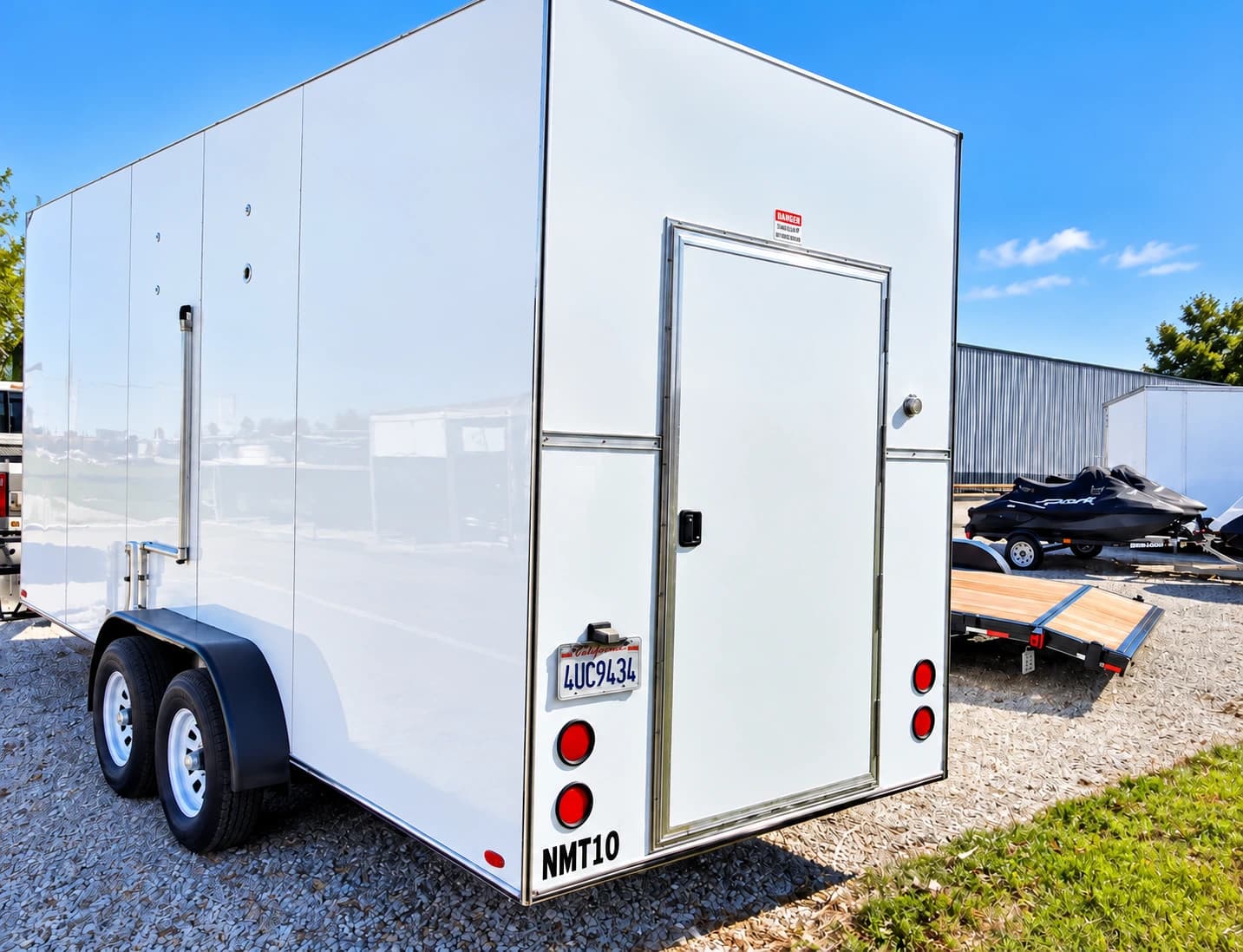
White refrigerated trailer with a rear door parked on a gravel lot
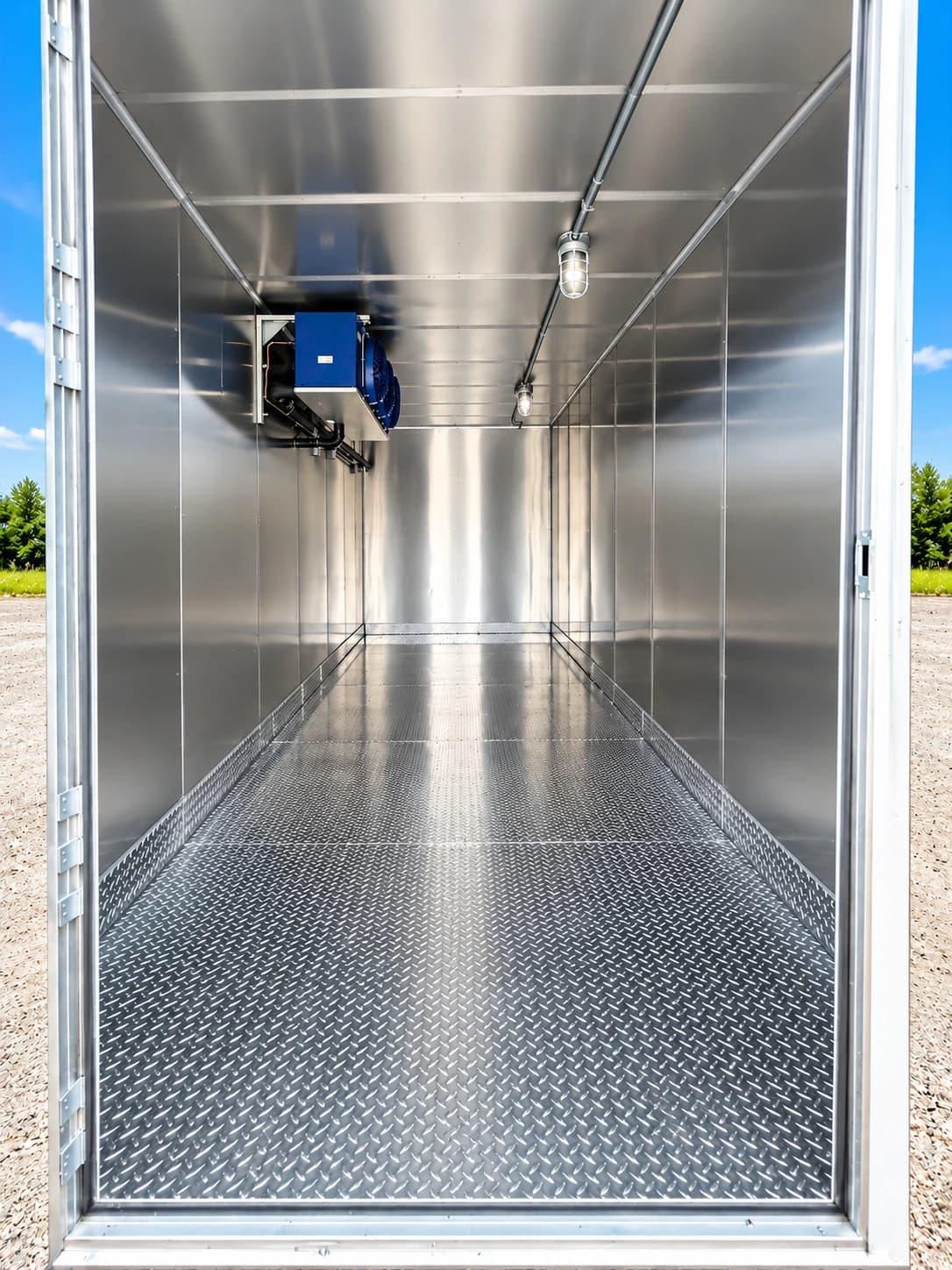
Long stainless steel cold storage interior with a diamond-plate floor and work lights
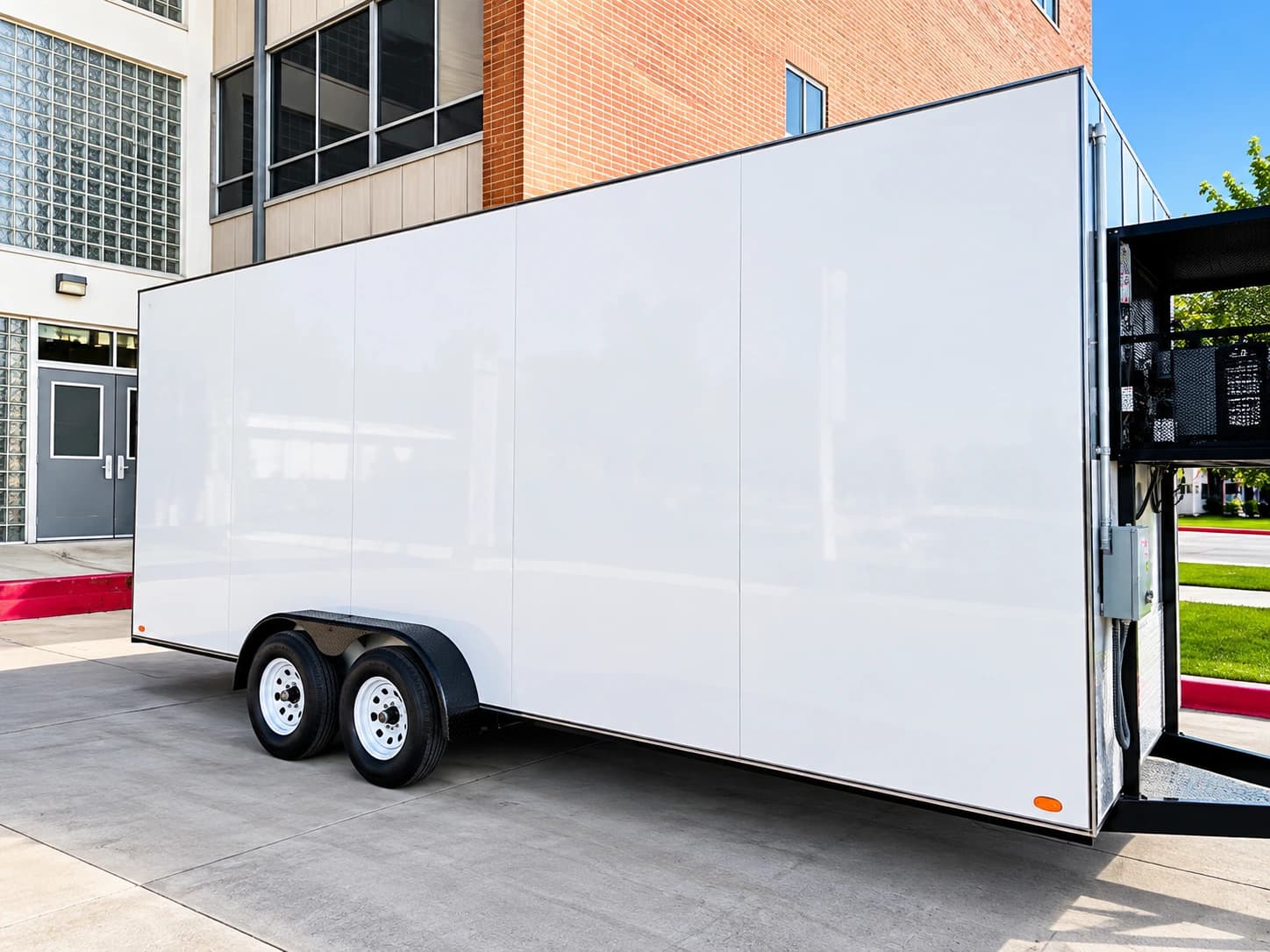
White refrigerated trailer on a paved lot with a power connection panel at the rear

Rental terms at a glance

Rentals run by the week or by the month, with short-term and long-term options, and we answer calls 24 hours a day, 7 days a week. Setup on site takes about 1 hour for a refrigeration unit and about 5 hours for a kitchen or dishwashing trailer; a ramp adds 4 to 6 hours and stairs add 5 to 15 minutes. GPS tracking is possible on request. Delivery, setup, servicing, and minimum terms are confirmed in your quote, and an inquiry does not reserve equipment.

Cold storage down? Call now.

Emergency refrigeration rentals in Utah.

If a walk-in cooler or freezer has stopped holding temperature, call now. Tell us your city and state, what failed, how much product is at risk, and what power is on site. Keep doors closed to hold the cold while we work out the right trailer or container for you.

Call 24/7: (888) 385-5513

Frequently asked questions

How do I rent a refrigerated trailer in Utah?

Call (888) 385-5513 or send the quote form with the address, what failed, the temperature you need, and the power at your site. We confirm the unit, availability, delivery, and terms in your quote. An inquiry does not reserve equipment.

Which Utah cities do you serve?

Service is nationwide, so we serve commercial and industrial customers across Utah. We list pages for Salt Lake City, West Valley City, West Jordan, Provo, St. George, and Hooper and 14 more cities and towns. If your site is elsewhere in the state, call and we will confirm.

Can I rent a refrigerated container in Utah for a long project?

Yes. A 20 ft or 40 ft refrigerated container suits renovations and seasonal peaks in Utah. Rent short term or lease for months, and see the full price rows on each unit page.

Do you rent mobile kitchens and dishwashing trailers in Utah?

Yes. When a Utah kitchen is down, we rent mobile kitchens and commercial dishwashing trailers to pair with refrigeration.

Who regulates food safety in Utah?

Utah Department of Health and Human Services (https://dhhs.utah.gov/) is the state agency to start with. Local health departments may add their own rules, so check before placing temporary refrigeration or a temporary kitchen.

What to send for a fast quote

  • The city and state where the unit will sit
  • What failed and how much product is at risk
  • Cooler (32°F) or freezer temperature needed
  • Power available at the site: voltage, phase, and amps
  • Access: gate or door width, surface, and where the unit will be placed
  • How long you expect to need it

Prefer to talk? Call (888) 385-5513 any time.

Request availability and a quote

Need help right now? Call (888) 385-5513. An inquiry does not reserve equipment.

Request availability and a quote

Emergency? Call (888) 385-5513 now, 24 hours a day.

Need help right now? Call (888) 385-5513. An inquiry does not reserve equipment.

Call In 24/7