Emergency refrigeration rentals. Open 24/7.

(888) 385-5513

HHrefrigeration

New York Refrigeration Trailer Rentals

Rental refrigeration is available throughout New York. When a walk-in cooler or freezer fails, our refrigerated trailer and container rentals put cold storage on your site, along with mobile kitchens and dishwashing trailers if the kitchen is down too. We list pages for New York, Buffalo, Yonkers, and Rochester and 16 more New York cities and towns, and service is nationwide, so a site anywhere in the state is covered. Hospitals, schools, restaurants, grocers, and distributors rent from us, short term or long term. Call 24/7 or request availability and a quote.

Call 24/7: (888) 385-5513

New York cities and towns

20 pages: the 5 largest cities, then 15 smaller towns under 10,000 people. Each page has local delivery planning, emergency support, requirements, and routes.

Cities

Largest cities

Smaller cities and towns

What drives cold-storage demand in New York

Upstate New York has a humid continental climate and downstate has a warmer humid subtropical one. Summer conditions run from June to September statewide, while January and February averages are below freezing across most of the state. Lake-effect snow is heavy off Lake Erie and Lake Ontario, with Buffalo averaging about 95 inches and Syracuse about 116 inches a year.

The hottest stretch runs june to August. The coldest runs december to March. Both extremes strain commercial refrigeration, and both bring calls for emergency cold storage.

Hospitals, universities, grocers, and restaurants here often need a trailer that fits a narrow service lane or a shared loading dock.

Weather and hazards

  • Winter storm (November to March): The December 2022 blizzard kept Buffalo under blizzard conditions for 37.5 hours, dropped 51.9 inches at the airport and caused 41 deaths in the Buffalo area, with about 108,000 Buffalo-Niagara customers losing power at various times. Blizzards that block roads and knock out power can often strand food deliveries and leave restaurants and grocers needing backup cold storage. Source
  • Hurricane (August to October): Hurricane Sandy (October 2012) pushed a record 9.40 ft surge at The Battery, caused about $32 billion in statewide damage and flooded subway tunnels and Long Island communities. Coastal surge and prolonged outages can disable restaurant and market refrigeration across the metro area. Source
  • Flood (Year round, often late summer and fall): Remnants of Hurricane Ida (September 2021) triggered the first-ever flash flood emergency for New York City and shut much of the subway, and flash flooding in Yonkers prompted a state of emergency in September 2023. Flooded kitchens and cold rooms can often be out of service for extended periods, creating demand for temporary kitchens and dishwashing. Source

Power outages

  • During Hurricane Sandy nearly 2 million people in New York City lost power at the peak, Con Edison reported 2.2 million customers out, and LIPA reported more than 900,000 outages on Long Island. Outages on this scale last days, longer than most food businesses can cover with on-site refrigeration. Source
  • The December 2022 blizzard left about 108,000 customers in the Buffalo-Niagara area without power at various times, and Buffalo's driving ban lasted more than five and a half days. Combined road closures and outages disrupt both refrigeration and food deliveries. Source

Food and hospitality

  • New York dairy farming produced about $2.5 billion in sales (roughly 45 percent of farm sales), and the state ranks third nationally in cow milk sales. Milk and dairy products need continuous refrigeration from farm to processor. Source
  • New York ranks second nationally in apples, with over 50,000 acres of orchards and about 694 commercial growers, and is a top-ten grape producer. Fruit harvests in fall need cold storage and packing capacity. Source
  • Hunts Point Produce Market in the Bronx has about 700,000 square feet of refrigerated space, supplies more than 22 million people in the metro area and runs 1,600 refrigerated trailers around the clock. The metro food supply depends heavily on cold chain capacity and refrigerated trailers. Source
  • The New York State Fair in Syracuse runs 13 days ending on Labor Day, set a record attendance of 1,329,275 in 2019 and hosts up to 250 vendors in one building. A fair of this size relies on large amounts of temporary food storage, kitchens and warewashing. Source
  • Chobani and NBT Bancorp are headquartered in Norwich, in Chenango County. Upstate dairy processing is a cold-chain-intensive industry. Source

Rules, agencies, and roads in New York

We rent to commercial and industrial customers only. Before you place temporary refrigeration or a temporary kitchen in New York, check local rules. The state agency to start with is New York State Department of Health (with local health departments, and NYS Department of Agriculture and Markets for retail food stores and processors). For emergency information, see New York State Division of Homeland Security and Emergency Services (DHSES), Office of Emergency Management.

  • Under the State Sanitary Code (10 NYCRR 14-1.40), potentially hazardous food in food service establishments must be held at 45 F or below or at 140 F or above, and intact shell eggs stored at 45 F or below. Any temporary refrigeration used by a restaurant or caterer must hold these temperatures. Source
  • The State Sanitary Code treats caterers that prepare food for service at a consumer's premises, temporary or permanent, as food service establishment operators subject to Subpart 14-1. Event caterers using a temporary kitchen are covered by the same rules as restaurants. Source
  • 10 NYCRR 14-1.140 requires food service establishments to have adequate quantities of potable hot and cold water and prevents sewage from connecting directly to food-handling drains. Mobile kitchens and dishwashing trailers have to provide compliant water supply and drainage. Source
  • The NYS Department of Agriculture and Markets has jurisdiction over more than 35,000 food handling establishments, including grocery stores, convenience stores and food processors. Retailers and processors using temporary cold storage may deal with Agriculture and Markets rather than the health department. Source

Main roads

  • I-87 / NYS Thruway: Runs through Yonkers and serves New Paltz at Exit 18.
  • I-90 / NYS Thruway: Crosses the Hudson at Rensselaer, meets I-81 in Syracuse and serves Fredonia at Exit 59.
  • I-81: Meets I-90 at Syracuse; the Syracuse Community Grid project began in 2023 and involves partially demolishing I-81 downtown.
  • I-86 (Southern Tier Expressway): Hornell's main highway, formerly NY Route 17; Route 17 near Monroe is slated to become I-86.
  • I-490: Built through Rochester's Third Ward in the 1960s.
  • I-390: Passes through Geneseo along with US 20A.
  • I-84: Runs south of Port Jervis; US 6 and 209 and NY 42 and 97 pass through the city.
  • US-20: Passes through Fredonia and serves Rensselaer along with US 9 and I-90.

Events that raise demand

  • New York State Fair (late August to Labor Day): A 13-day fair at the Empire Expo Center in Syracuse that set a record attendance of 1,329,275 in 2019. Huge food-vendor operations need cold storage and warewashing.
  • Rochester Lilac Festival (May): A ten-day festival at Highland Park drawing over 500,000 visitors, with dozens of food vendors. Festival vendors typically need temporary refrigeration and dishwashing.
  • Geneseo Airshow (second weekend of July): Held annually at the Geneseo airfield. Airshow crowds rely on temporary food service.
  • Corn Hill Arts Festival: An annual Rochester arts festival held since 1969. Street festivals use temporary kitchens and cold storage.
  • Port Jefferson Dickens Festival (December): Held each December in Port Jefferson Village, alongside a Fourth of July parade and summer harbor concerts. Village festivals and tourism add temporary food service demand.

Refrigeration equipment to rent in New York

Each card shows the lowest printed price. Open a unit for the full price row.

Equipment

12 ft Refrigerated Trailer

Starting from $1,895 / month

The smallest trailer in the lineup. It fits tight lots and loading areas when a small walk-in cooler or freezer goes down.

View details

20 ft Refrigerated Trailer

Starting from $1,895 / month

The workhorse. A 20 ft trailer comes as a 32°F cooler or as a low-temperature freezer configuration, so you can match what failed.

View details

40 ft Refrigerated Container

Starting from $3,995 / month

The largest cold storage option. It takes pallets and bulk product for food distribution, disaster response, and large facilities.

View details
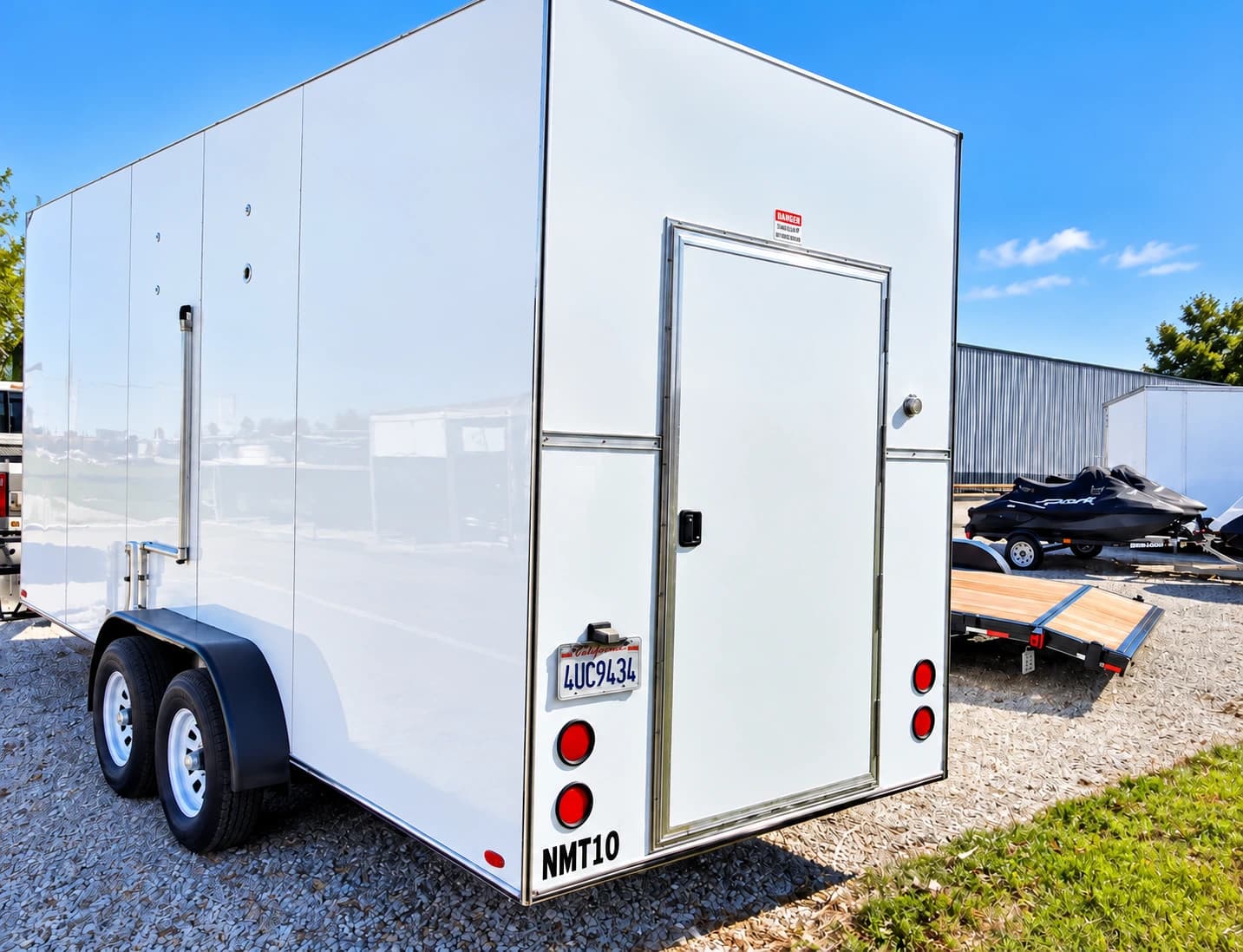
White refrigerated trailer with a rear door parked on a gravel lot
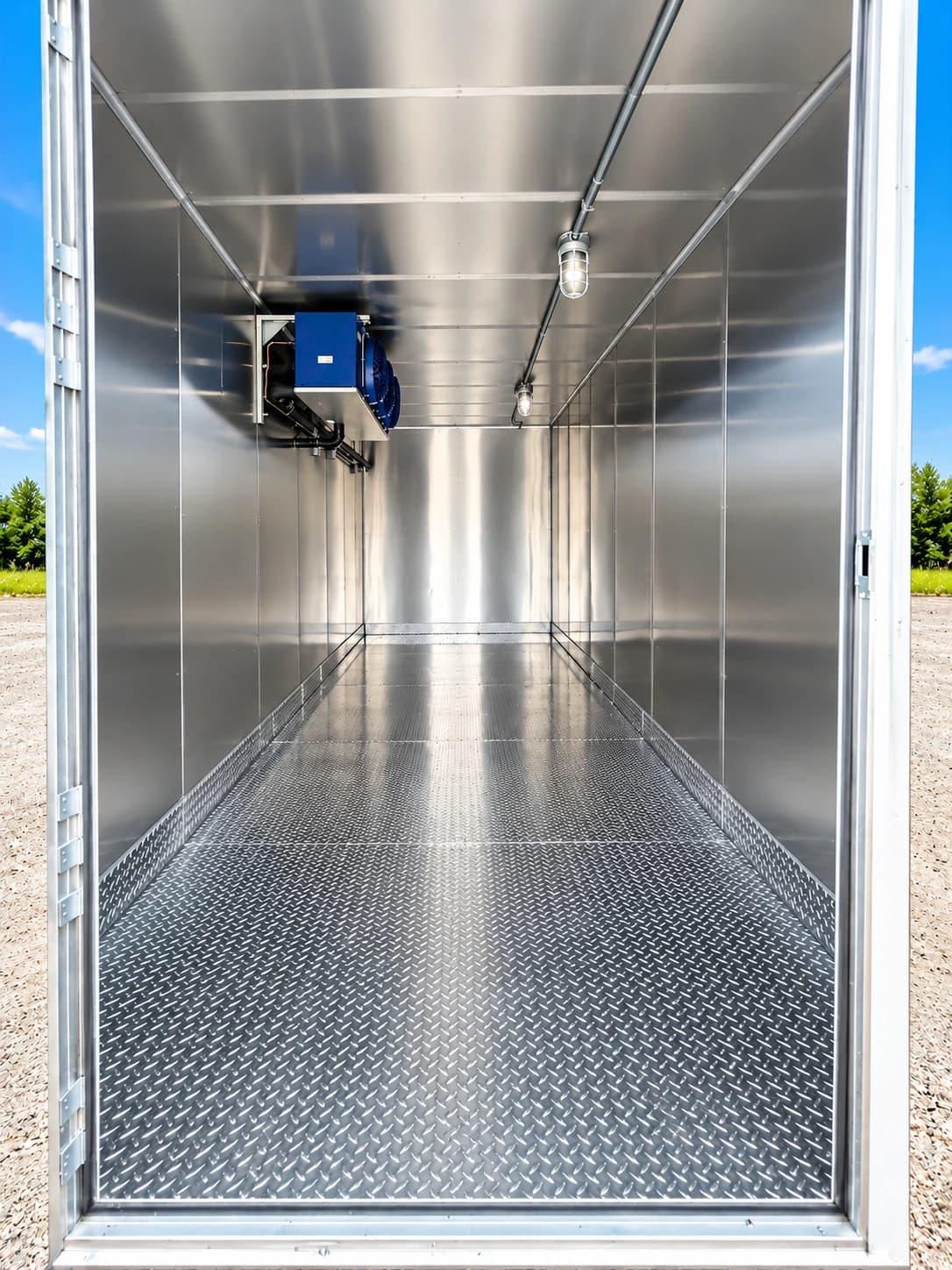
Long stainless steel cold storage interior with a diamond-plate floor and work lights
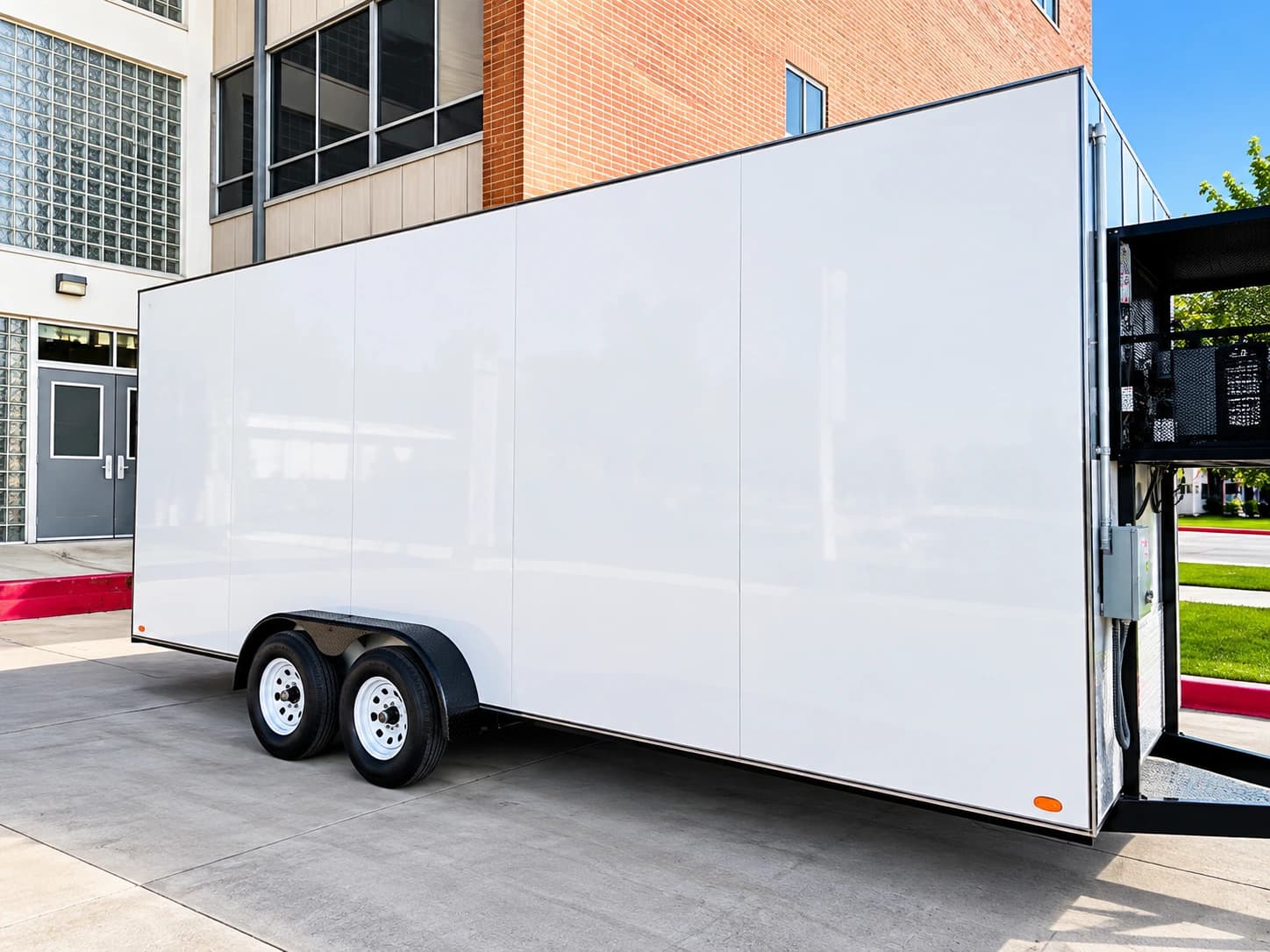
White refrigerated trailer on a paved lot with a power connection panel at the rear

Rental terms at a glance

Rentals run by the week or by the month, with short-term and long-term options, and we answer calls 24 hours a day, 7 days a week. Setup on site takes about 1 hour for a refrigeration unit and about 5 hours for a kitchen or dishwashing trailer; a ramp adds 4 to 6 hours and stairs add 5 to 15 minutes. GPS tracking is possible on request. Delivery, setup, servicing, and minimum terms are confirmed in your quote, and an inquiry does not reserve equipment.

Cold storage down? Call now.

Emergency refrigeration rentals in New York.

If a walk-in cooler or freezer has stopped holding temperature, call now. Tell us your city and state, what failed, how much product is at risk, and what power is on site. Keep doors closed to hold the cold while we work out the right trailer or container for you.

Call 24/7: (888) 385-5513

Frequently asked questions

How do I rent a refrigerated trailer in New York?

Call (888) 385-5513 or send the quote form with the address, what failed, the temperature you need, and the power at your site. We confirm the unit, availability, delivery, and terms in your quote. An inquiry does not reserve equipment.

Which New York cities do you serve?

Service is nationwide, so we serve commercial and industrial customers across New York. We list pages for New York, Buffalo, Yonkers, Rochester, Syracuse, and Amityville and 14 more cities and towns. If your site is elsewhere in the state, call and we will confirm.

Can I rent a refrigerated container in New York for a long project?

Yes. A 20 ft or 40 ft refrigerated container suits renovations and seasonal peaks in New York. Rent short term or lease for months, and see the full price rows on each unit page.

Do you rent mobile kitchens and dishwashing trailers in New York?

Yes. When a New York kitchen is down, we rent mobile kitchens and commercial dishwashing trailers to pair with refrigeration.

Who regulates food safety in New York?

New York State Department of Health (with local health departments, and NYS Department of Agriculture and Markets for retail food stores and processors) (https://www.health.ny.gov) is the state agency to start with. Local health departments may add their own rules, so check before placing temporary refrigeration or a temporary kitchen.

What to send for a fast quote

  • The city and state where the unit will sit
  • What failed and how much product is at risk
  • Cooler (32°F) or freezer temperature needed
  • Power available at the site: voltage, phase, and amps
  • Access: gate or door width, surface, and where the unit will be placed
  • How long you expect to need it

Prefer to talk? Call (888) 385-5513 any time.

Request availability and a quote

Need help right now? Call (888) 385-5513. An inquiry does not reserve equipment.

Request availability and a quote

Emergency? Call (888) 385-5513 now, 24 hours a day.

Need help right now? Call (888) 385-5513. An inquiry does not reserve equipment.

Call In 24/7