Emergency refrigeration rentals. Open 24/7.

(888) 385-5513

HHrefrigeration

California Refrigeration Trailer Rentals

Rental refrigeration is available throughout California. When a walk-in cooler or freezer fails, our refrigerated trailer and container rentals put cold storage on your site, along with mobile kitchens and dishwashing trailers if the kitchen is down too. We list pages for Los Angeles, San Diego, San Jose, and San Francisco and 16 more California cities and towns, and service is nationwide, so a site anywhere in the state is covered. Hospitals, schools, restaurants, grocers, and distributors rent from us, short term or long term. Call 24/7 or request availability and a quote.

Call 24/7: (888) 385-5513

California cities and towns

20 pages: the 5 largest cities, then 15 smaller towns under 10,000 people. Each page has local delivery planning, emergency support, requirements, and routes.

Cities

Largest cities

Smaller cities and towns

What drives cold-storage demand in California

Summers are hot and dry inland, with Central Valley highs often above 100 F, while the coast stays much cooler and humid. Winters are mild on the coast, foggy in the Central Valley, and snowy in the Sierra Nevada and other mountains, with the rainy season running October through March.

The hottest stretch runs june to September. The coldest runs december to February. Both extremes strain commercial refrigeration, and both bring calls for emergency cold storage.

Food producers, distributors, restaurants, and healthcare facilities use trailers and containers for both emergencies and planned work.

Weather and hazards

  • Wildfire (Late spring to early fall (also fall wind events)): California has a long wildfire season, with dry offshore winds (Diablo and Santa Ana) driving critical fire weather. The Camp Fire in November 2018 killed 85 people and destroyed 18,804 structures. Wildfires and the evacuations and power shutoffs around them can leave restaurants, grocers and caterers without refrigeration or kitchen use, which often creates a need for temporary cold storage or a mobile kitchen. Source
  • Earthquake (Year-round): USGS's UCERF3 forecast put the chance of at least one magnitude 6.7 or larger earthquake somewhere in California over a 30-year window beginning in 2014 at 99 percent. A major quake can interrupt grid power and damage commercial kitchens and cold rooms, which can create a need for emergency cold storage and temporary food service. Source
  • Heat wave (June to September): Inland summers regularly top 100 F, and the September 2022 heat wave set a statewide electricity demand record while the grid operator issued Flex Alerts for nine straight days. Extreme heat can overload on-site refrigeration and strain the grid, which often leads food businesses and event operators to add temporary refrigerated capacity. Source
  • Winter storm (November to April): Heavy Sierra snowfall brings chain controls and occasional closures on I-80 over Donner Summit, and the California Highway Patrol usually closes I-5 at the Grapevine during snowstorms. Mountain closures can delay refrigerated freight and strand perishable loads, which can create short-term cold storage needs at distribution points. Source

Power outages

  • California's large investor-owned utilities may cut power ahead of high winds in a Public Safety Power Shutoff (PSPS) to reduce wildfire ignition risk, an authority the CPUC affirmed in 2012; the CPUC oversees and has penalized utilities over PSPS execution. Planned multi-day shutoffs often affect commercial food operations, which can create a need for backup refrigeration and temporary kitchens. Source
  • In October 2019 PG&E's wildfire shutoff left about 738,000 customers across roughly 35 counties without power, according to the governor's letter to PG&E. Shutoffs of this size can last days for some customers, which can force grocers and restaurants to move perishable inventory into temporary cold storage. Source
  • During the September 2022 heat wave, statewide demand reached a record of about 52,061 MW (per the grid operator) and a Stage 3 emergency was declared, one step short of rotating outages. Grid emergencies raise the risk of outages and curtailment during peak summer demand, when refrigeration loads are also highest. Source

Food and hospitality

  • Dairy was California's top commodity in the 2021-2022 CDFA report at about $7.6 billion, and the state produced about 18.1 percent of U.S. milk. Dairy and processing depend on continuous cold chain, and surge or outage situations can create demand for temporary refrigerated trailers. Source
  • Grapes brought in about $5.2 billion in cash receipts in 2021, up 16.5 percent from 2020, with almonds and pistachios also among the leading crops. Harvest and crush seasons concentrate large volumes of perishable product in a short window, which can create seasonal needs for extra cold storage. Source
  • The Los Angeles and Long Beach ports together handle a large share of U.S. container imports (reported at more than 30 percent in 2024). Port-area importers and distributors can need overflow or temporary refrigerated storage when volumes surge or inspections hold cargo. Source
  • State Route 99 runs the length of the Central Valley, linking farms with processing and packing businesses in cities from Bakersfield to Chico. Packing sheds and processors along the corridor often rely on refrigerated space that can be short during peak harvest. Source
  • Napa Valley alone draws over 4.5 million visitors a year, and California's wine country is a major wine-tourism destination. Wineries, restaurants and tasting events often use temporary kitchens and refrigeration during harvest and tourist peaks. Source

Rules, agencies, and roads in California

We rent to commercial and industrial customers only. Before you place temporary refrigeration or a temporary kitchen in California, check local rules. The state agency to start with is California Department of Public Health (CDPH), Food and Drug Branch. For emergency information, see California Governor's Office of Emergency Services (Cal OES).

  • Under the California Retail Food Code (CalCode), CDPH sets health and sanitation standards while local environmental health agencies have primary responsibility for enforcement and permitting. Anyone placing temporary refrigeration or a kitchen at a food business should confirm requirements with the county environmental health office that permits that business. Source
  • CDPH publishes a power-outage handout for food facilities that sets guidance by outage length and food temperature when power returns; food that sat in the danger zone is generally discarded. Operators facing an outage can use it to decide what product to keep, and may seek temporary cold storage to stay below holding limits. Source
  • Mobile food facilities such as trucks and trailers receive permits from the local environmental health agency and must operate with an approved commissary, mobile support unit or other approved facility. A mobile kitchen unit generally needs local permitting and an approved base before it can serve the public. Source
  • Local agencies review plans and inspect mobile food units before they open, and a food facility may not open without a valid permit under Health and Safety Code section 114381. Plan check and pre-opening inspection timelines can affect how quickly a temporary kitchen can be put into service. Source

Main roads

  • I-5: Longest Interstate in California at about 797 miles; crosses the Central Valley, Tejon Pass (Grapevine, usually closed by CHP in snowstorms) and Siskiyou Summit at the Oregon line.
  • SR 99: Runs through the Central Valley from near Wheeler Ridge to near Red Bluff, linking farms to processing and packing businesses.
  • I-80: Crosses the Sierra Nevada at Donner Summit (about 7,239 ft); chain controls are common in winter and closures occur in severe storms.
  • US-101: Coastal north-south corridor that passes Cotati, Cloverdale and Gonzales.
  • I-505: Runs through Winters in Yolo County.
  • SR 33: Passes through downtown Firebaugh and is the main north-south route through Ojai.

Events that raise demand

  • Coachella Valley Music and Arts Festival (April (two weekends)): Held over two consecutive three-day weekends at the Empire Polo Club in Indio, with an estimated 245,000 attendees in 2025. Large festivals drive heavy food and beverage service in desert heat, which can create demand for temporary refrigeration and kitchen capacity.
  • California State Fair (July (17 days)): Held at Cal Expo in Sacramento for 17 days in mid-July, with 652,873 attendees in 2022; the schedule is set to move to mid-September through early October starting in 2027. A multi-week fair with vendors and food booths can need temporary cold storage and warewashing support.
  • Big Fresno Fair (October (12 days)): A 12-day fair each October in Fresno that draws more than 600,000 visitors. Large fair crowds in an agricultural region can raise demand for temporary food service and cold storage.
  • 2028 Summer Olympics (July 14-30, 2028): Los Angeles hosts the 2028 Summer Olympics, with venues across Greater Los Angeles including the Coliseum, SoFi Stadium, the Rose Bowl and Long Beach. Mass-gathering events with many venues can create demand for temporary kitchens and refrigerated storage.

Refrigeration equipment to rent in California

Each card shows the lowest printed price. Open a unit for the full price row.

Equipment

12 ft Refrigerated Trailer

Starting from $1,895 / month

The smallest trailer in the lineup. It fits tight lots and loading areas when a small walk-in cooler or freezer goes down.

View details

20 ft Refrigerated Trailer

Starting from $1,895 / month

The workhorse. A 20 ft trailer comes as a 32°F cooler or as a low-temperature freezer configuration, so you can match what failed.

View details

40 ft Refrigerated Container

Starting from $3,995 / month

The largest cold storage option. It takes pallets and bulk product for food distribution, disaster response, and large facilities.

View details

California in the Pacific

Service is available across the whole region. See the Pacific page, or go to a neighboring state:
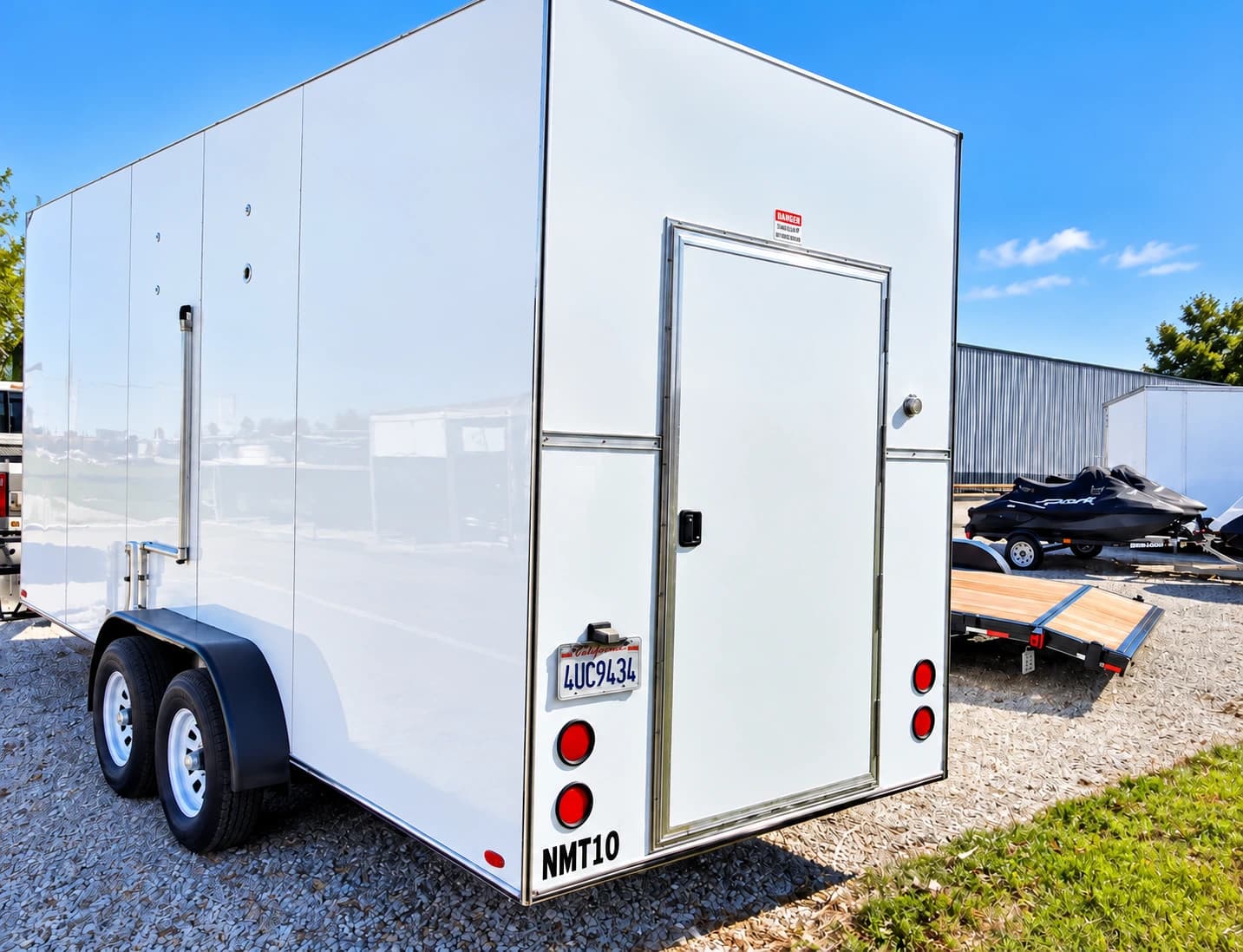
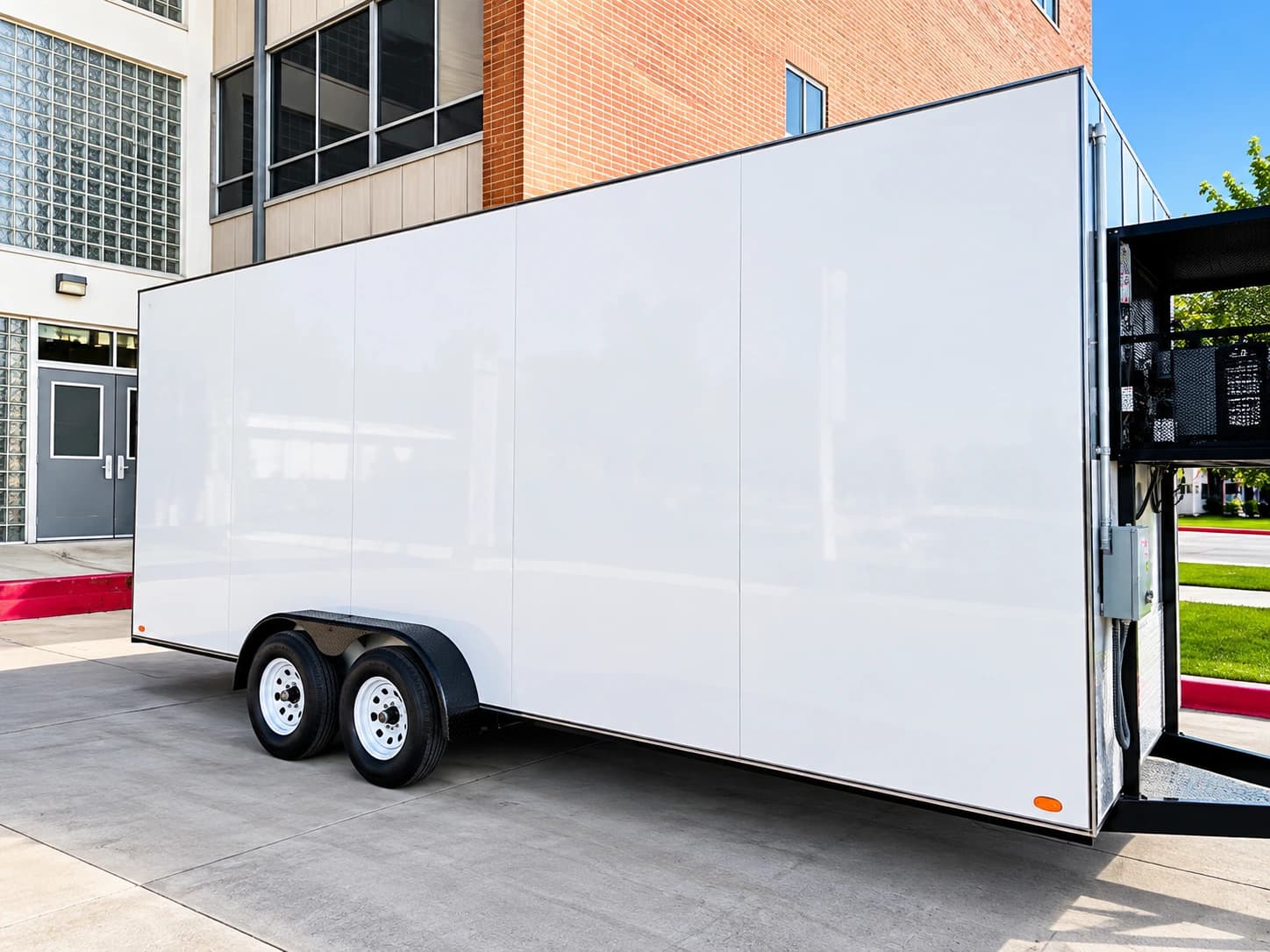
White refrigerated trailer with a rear door parked on a gravel lot
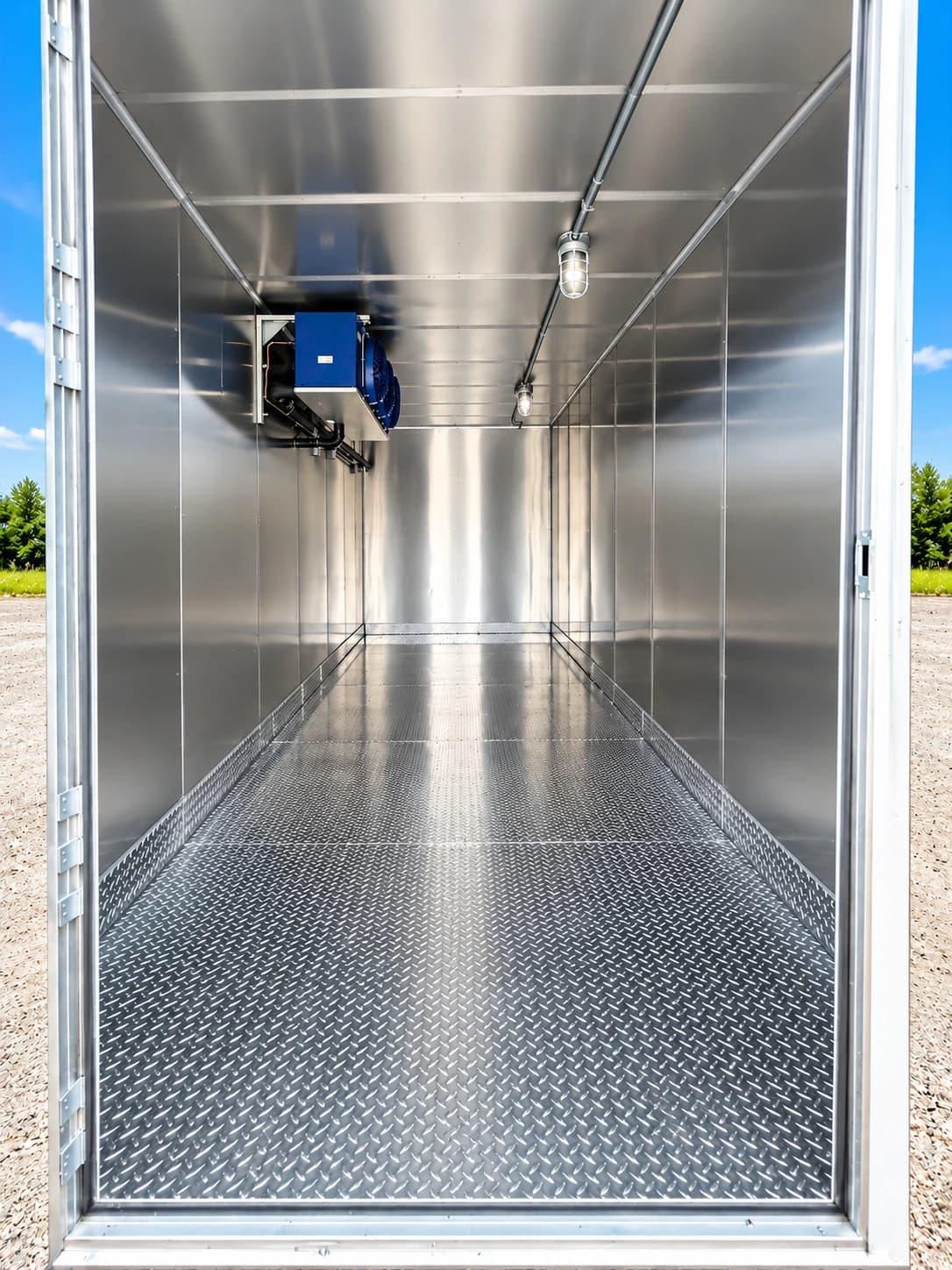
Long stainless steel cold storage interior with a diamond-plate floor and work lights
White refrigerated trailer on a paved lot with a power connection panel at the rear

Rental terms at a glance

Rentals run by the week or by the month, with short-term and long-term options, and we answer calls 24 hours a day, 7 days a week. Setup on site takes about 1 hour for a refrigeration unit and about 5 hours for a kitchen or dishwashing trailer; a ramp adds 4 to 6 hours and stairs add 5 to 15 minutes. GPS tracking is possible on request. Delivery, setup, servicing, and minimum terms are confirmed in your quote, and an inquiry does not reserve equipment.

Cold storage down? Call now.

Emergency refrigeration rentals in California.

If a walk-in cooler or freezer has stopped holding temperature, call now. Tell us your city and state, what failed, how much product is at risk, and what power is on site. Keep doors closed to hold the cold while we work out the right trailer or container for you.

Call 24/7: (888) 385-5513

Frequently asked questions

How do I rent a refrigerated trailer in California?

Call (888) 385-5513 or send the quote form with the address, what failed, the temperature you need, and the power at your site. We confirm the unit, availability, delivery, and terms in your quote. An inquiry does not reserve equipment.

Which California cities do you serve?

Service is nationwide, so we serve commercial and industrial customers across California. We list pages for Los Angeles, San Diego, San Jose, San Francisco, Fresno, and Corte Madera and 14 more cities and towns. If your site is elsewhere in the state, call and we will confirm.

Can I rent a refrigerated container in California for a long project?

Yes. A 20 ft or 40 ft refrigerated container suits renovations and seasonal peaks in California. Rent short term or lease for months, and see the full price rows on each unit page.

Do you rent mobile kitchens and dishwashing trailers in California?

Yes. When a California kitchen is down, we rent mobile kitchens and commercial dishwashing trailers to pair with refrigeration.

Who regulates food safety in California?

California Department of Public Health (CDPH), Food and Drug Branch (https://www.cdph.ca.gov) is the state agency to start with. Local health departments may add their own rules, so check before placing temporary refrigeration or a temporary kitchen.

What to send for a fast quote

  • The city and state where the unit will sit
  • What failed and how much product is at risk
  • Cooler (32°F) or freezer temperature needed
  • Power available at the site: voltage, phase, and amps
  • Access: gate or door width, surface, and where the unit will be placed
  • How long you expect to need it

Prefer to talk? Call (888) 385-5513 any time.

Request availability and a quote

Need help right now? Call (888) 385-5513. An inquiry does not reserve equipment.

Request availability and a quote

Emergency? Call (888) 385-5513 now, 24 hours a day.

Need help right now? Call (888) 385-5513. An inquiry does not reserve equipment.

Call In 24/7