Emergency refrigeration rentals. Open 24/7.

(888) 385-5513

HHrefrigeration

Georgia Refrigeration Trailer Rentals

Rental refrigeration is available throughout Georgia. When a walk-in cooler or freezer fails, our refrigerated trailer and container rentals put cold storage on your site, along with mobile kitchens and dishwashing trailers if the kitchen is down too. We list pages for Atlanta, Columbus, Macon-Bibb County, and Savannah and 16 more Georgia cities and towns, and service is nationwide, so a site anywhere in the state is covered. Hospitals, schools, restaurants, grocers, and distributors rent from us, short term or long term. Call 24/7 or request availability and a quote.

Call 24/7: (888) 385-5513

Georgia cities and towns

20 pages: the 5 largest cities, then 15 smaller towns under 10,000 people. Each page has local delivery planning, emergency support, requirements, and routes.

Cities

Largest cities

Smaller cities and towns

What drives cold-storage demand in Georgia

Summers are hot and humid, with afternoon highs near 90 F and often above 95 F, overnight lows near 68 F, and a state record of 112 F. Winters are mild; snow is rare in the south, and the main winter threat in the northern Piedmont is freezing rain. North Georgia mountains run about 8 F cooler than Atlanta.

The hottest stretch runs june to September. The coldest runs december to February. Both extremes strain commercial refrigeration, and both bring calls for emergency cold storage.

Restaurants, grocers, food distributors, and healthcare kitchens in the region often rent a trailer when a compressor fails in the heat.

Weather and hazards

  • Heat wave (June to September): Atlanta reaches 90 F or higher on about 47 days a year, heat waves above 100 F have often been recorded, and the statewide record is 112 F. Sustained heat raises the load on refrigeration and can overwhelm older coolers, which can create a need for extra or backup cold storage. Source
  • Ice storm (December to February): Freezing rain is the main winter threat in the northern Piedmont, and ice storms cause more problems in Atlanta than snow; the most severe occurred January 7, 1973. Ice can down power lines for days and strand perishable inventory, which can create a need for emergency refrigeration. Source
  • Tornado (any month; Adel was struck in January 2017 and again in 2020 and 2023): Georgia is among the leading states for tornado incidents. A low-end EF3 on January 22, 2017 killed 14 people in Adel, and an EF2 caused major damage there on January 22, 2023. Tornado damage to buildings and power lines can take kitchens and coolers out of use and often creates a short-term need for temporary equipment. Source
  • Hurricane (June to November, peak late summer): Direct hurricane strikes are uncommon, but Tropical Storm Alberto (1994) dropped over 20 inches of rain in 24 hours in central Georgia, and Savannah has seen Matthew (2016), Irma (2017), and Debby and Helene (2024). Storm flooding and widespread power loss can spoil refrigerated stock and often create demand for emergency cold storage, kitchens and warewashing. Source

Power outages

  • More than 1 million Georgia customers lost power at the peak of Hurricane Helene in September 2024. Outages of this size, reaching deep into inland Georgia, can leave grocers, restaurants and food plants without refrigeration for days. Source
  • Georgia Power called Helene the most destructive hurricane in the company's history and reported restoring more than 840,000 customers by midday September 30, 2024. Multi-day restoration windows mean food businesses can face outages longer than coolers can hold temperature. Source

Food and hospitality

  • Garden City Terminal at the Port of Savannah lists 3,246 reefer plugs (126 racks with 3,024 slots plus 222 powered ground or wheeled slots), with backup generators to prevent cold chain interruption. A very large reefer operation shows how much perishable cargo depends on uninterrupted power and how overflow cold storage can be needed at peaks. Source
  • The Georgia Ports Authority says off-terminal cold storage facilities total about 2.36 million square feet, as close as three miles from Garden City Terminal. A large cold storage cluster signals heavy import and export of refrigerated goods through coastal Georgia. Source
  • The Port of Savannah handled 4.9 million TEU in 2023 and is North America's fourth-largest container port. High container volume supports a large local logistics and food distribution sector. Source
  • Broilers are Georgia's top farm-gate commodity, valued at about $6.1 billion or 36.1% of total farm-gate value in a UGA report. Poultry growing and processing depends on refrigeration and can need temporary capacity during outages or peaks. Source
  • Savannah drew about 14.8 million visitors in 2019, and Atlanta's Hartsfield-Jackson airport handled an estimated 93.7 million passengers in 2022. High visitor volumes drive hotel, restaurant and catering demand that can exceed fixed kitchen capacity at peaks. Source

Rules, agencies, and roads in Georgia

We rent to commercial and industrial customers only. Before you place temporary refrigeration or a temporary kitchen in Georgia, check local rules. The state agency to start with is Georgia Department of Public Health, Environmental Health (Food Service). For emergency information, see Georgia Emergency Management and Homeland Security Agency.

  • Georgia's food service rules are in Chapter 511-6-1, with the Department of Public Health copy marked as revised in February 2025. Anyone setting up a temporary kitchen or warewashing station should check the current chapter number, since older documents cite the superseded Chapter 290-5-14. Source
  • The state temporary food service form says a vendor application must reach the health department 30 days before the event and a temporary operation may not run more than 14 consecutive days. Temporary kitchens at events need lead time and must plan around the 14-day limit. Source
  • DPH's Food Service Design Manual section U covers plan review and permitting for mobile food service units and extended food service units, and permits are issued by county health departments. A mobile kitchen generally needs a pre-operational plan review and a permit in each county where it operates. Source
  • The Georgia Department of Agriculture's food safety and natural disasters brochure advises contacting the Department of Public Health after a power outage or flooding and discarding food when in doubt. After a long outage or flood, businesses may need compliant temporary refrigeration to restock, and should confirm requirements with the health department. Source

Main roads

  • I-75: North-south spine through Macon, Cordele (roughly halfway between Macon and Valdosta) and Adel (Exit 39).
  • I-16: Links Macon to Savannah; Swainsboro is about 14 miles north of it.
  • I-20: Runs along the southern edge of Bremen, 46 miles west of Atlanta, toward Birmingham.
  • I-85: Nearest interstate to Toccoa in the northeast.
  • I-185: North-south through Columbus, about 50 miles to I-85.
  • I-475: Bypass route around Macon.
  • GA-400: Runs to Atlanta, with its northern terminus 5 miles south of Dahlonega.

Events that raise demand

  • Georgia National Fair (early October): The 9-10 day fair in Perry averages over 565,500 visitors a year. A fair of that size relies on concession vendors that often need extra refrigeration and cooking capacity.
  • International Cherry Blossom Festival (mid-March): A 10-day festival held each mid-March in Macon. Multi-day festivals with food vendors can need temporary kitchens and cold storage.
  • Gold Rush Days (third weekend in October): The Dahlonega festival draws over 200,000 people over two days. A small mountain town absorbing hundreds of thousands of visitors depends on temporary food service and cold storage.
  • NASCAR race weekends at Atlanta Motor Speedway (spring and summer): Hampton hosts two NASCAR Cup Series weekends a year (Autotrader 400 in spring, Quaker State 400 in summer), plus support series races. Race weekends bring tens of thousands of fans and large catering operations that can use temporary refrigeration and kitchens.

Refrigeration equipment to rent in Georgia

Each card shows the lowest printed price. Open a unit for the full price row.

Equipment

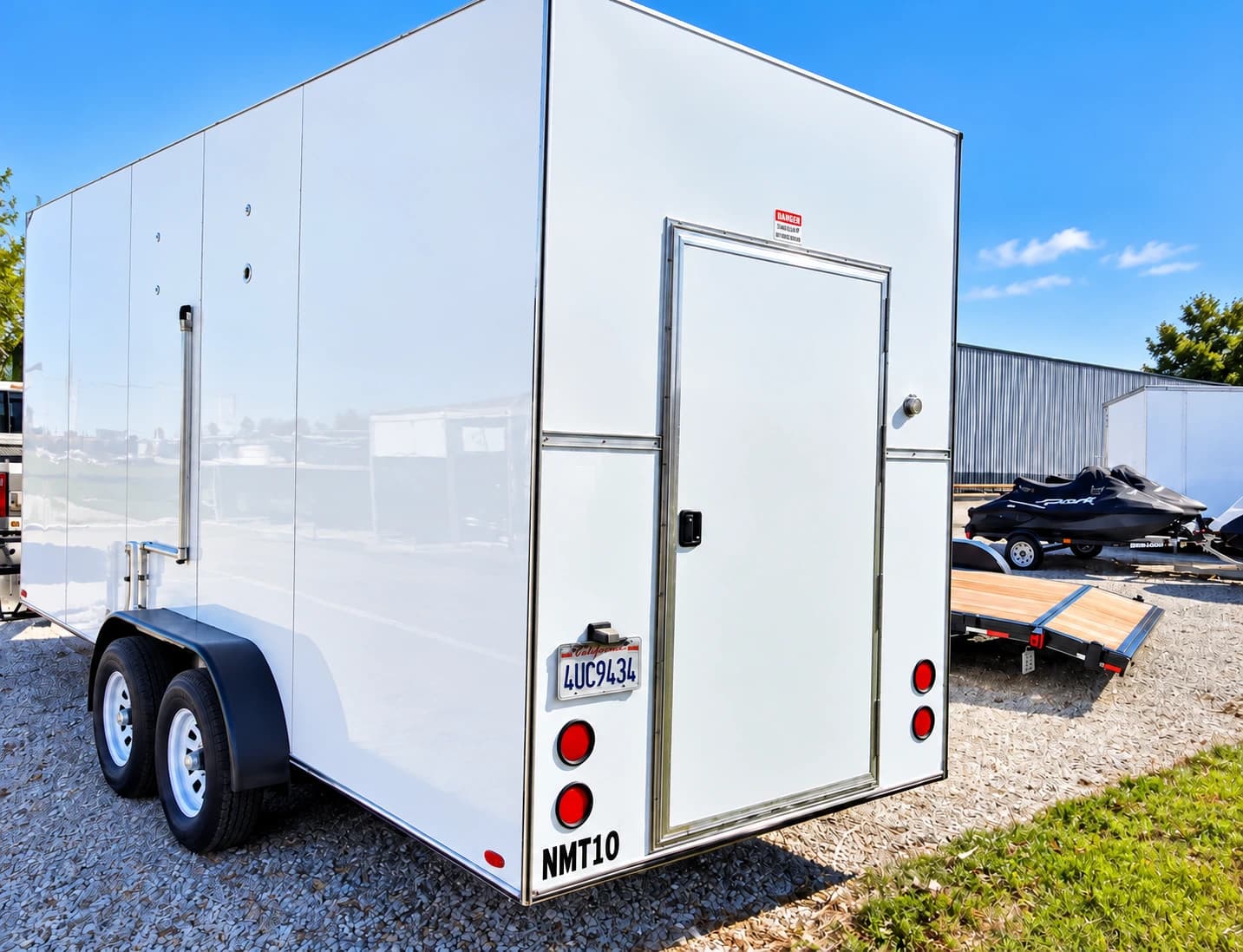
12 ft Refrigerated Trailer

Starting from $1,895 / month

The smallest trailer in the lineup. It fits tight lots and loading areas when a small walk-in cooler or freezer goes down.

View details

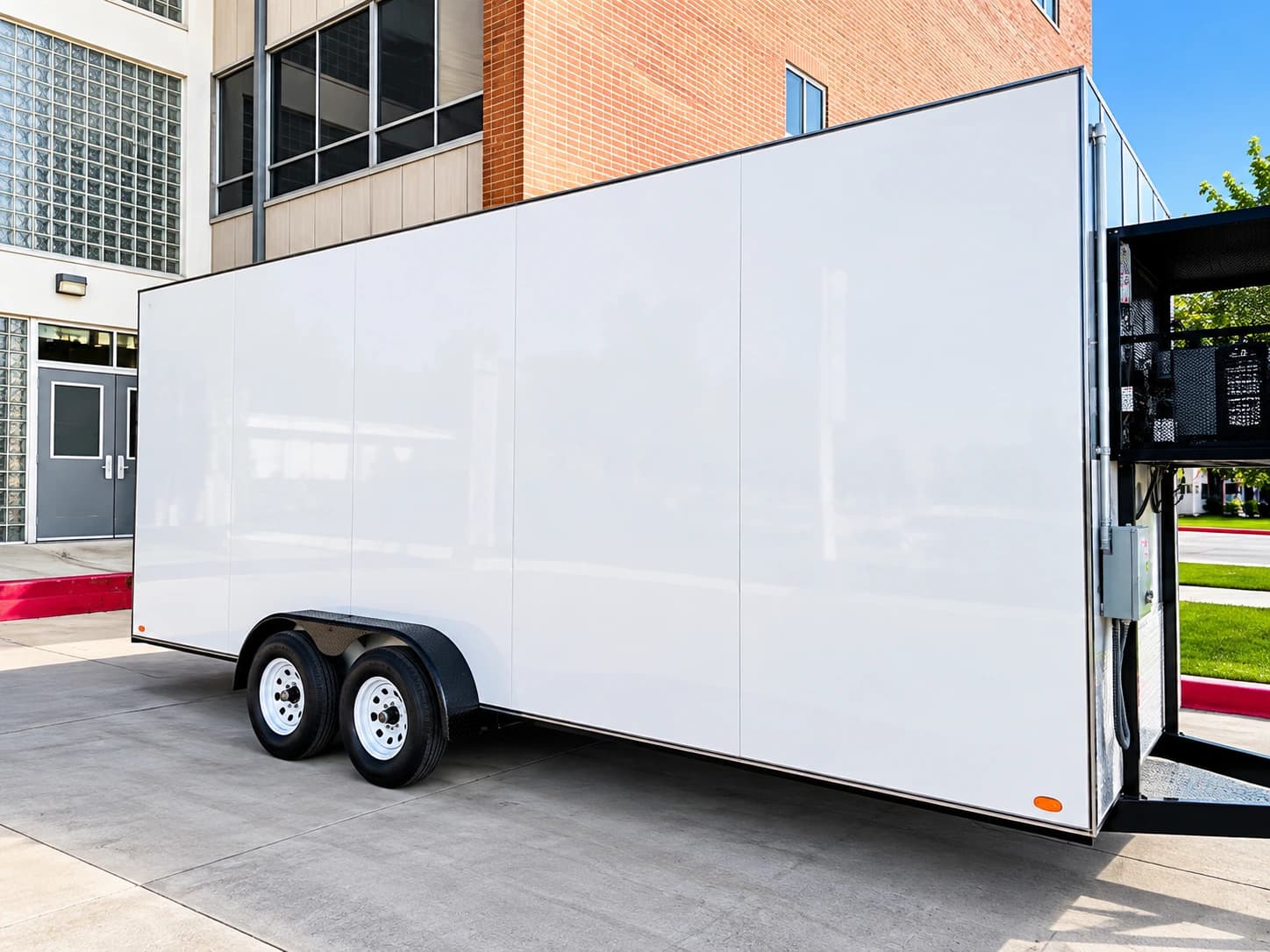
20 ft Refrigerated Trailer

Starting from $1,895 / month

The workhorse. A 20 ft trailer comes as a 32°F cooler or as a low-temperature freezer configuration, so you can match what failed.

View details

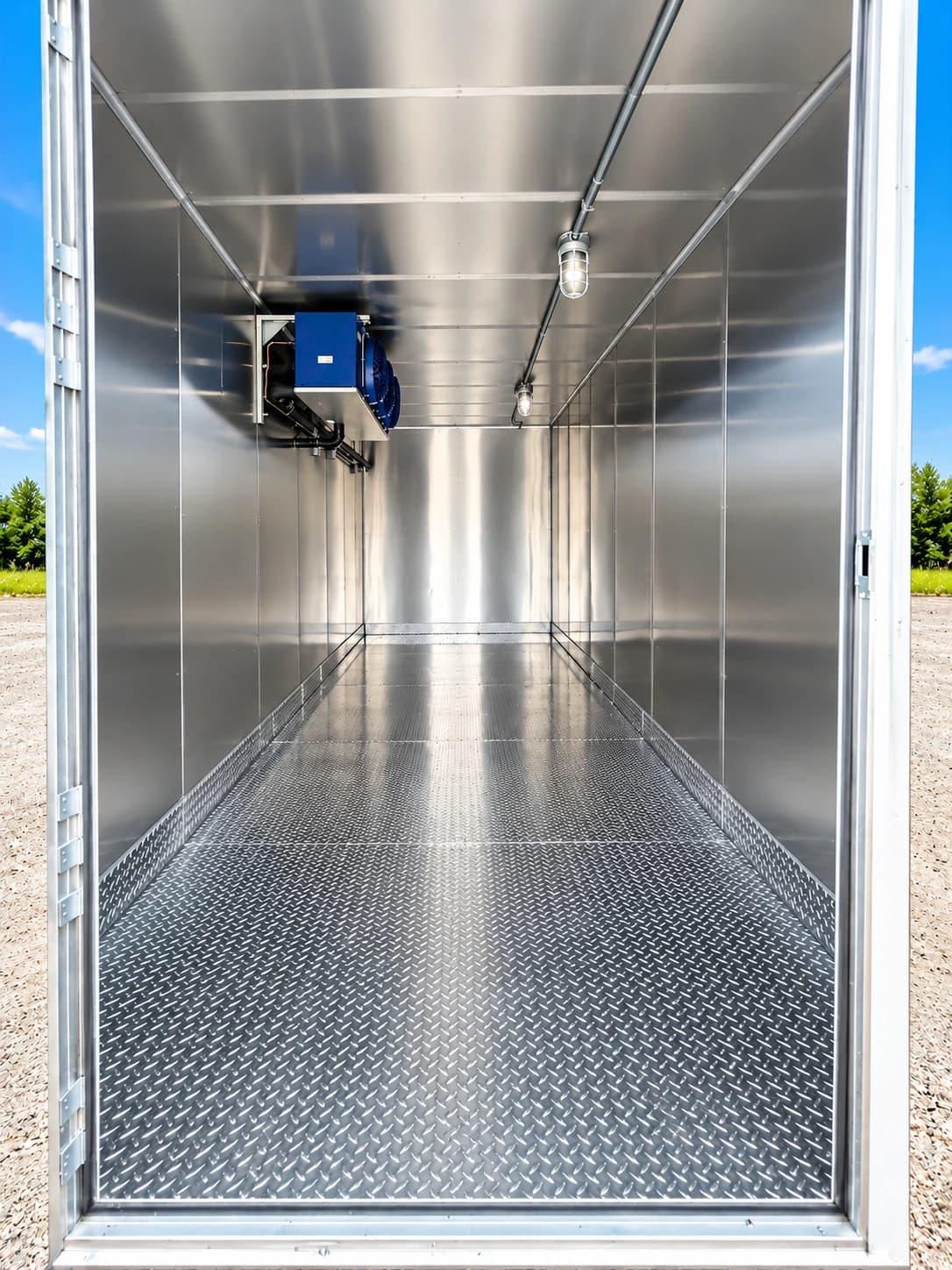
40 ft Refrigerated Container

Starting from $3,995 / month

The largest cold storage option. It takes pallets and bulk product for food distribution, disaster response, and large facilities.

View details
White refrigerated trailer with a rear door parked on a gravel lot
Long stainless steel cold storage interior with a diamond-plate floor and work lights
White refrigerated trailer on a paved lot with a power connection panel at the rear

Rental terms at a glance

Rentals run by the week or by the month, with short-term and long-term options, and we answer calls 24 hours a day, 7 days a week. Setup on site takes about 1 hour for a refrigeration unit and about 5 hours for a kitchen or dishwashing trailer; a ramp adds 4 to 6 hours and stairs add 5 to 15 minutes. GPS tracking is possible on request. Delivery, setup, servicing, and minimum terms are confirmed in your quote, and an inquiry does not reserve equipment.

Cold storage down? Call now.

Emergency refrigeration rentals in Georgia.

If a walk-in cooler or freezer has stopped holding temperature, call now. Tell us your city and state, what failed, how much product is at risk, and what power is on site. Keep doors closed to hold the cold while we work out the right trailer or container for you.

Call 24/7: (888) 385-5513

Frequently asked questions

How do I rent a refrigerated trailer in Georgia?

Call (888) 385-5513 or send the quote form with the address, what failed, the temperature you need, and the power at your site. We confirm the unit, availability, delivery, and terms in your quote. An inquiry does not reserve equipment.

Which Georgia cities do you serve?

Service is nationwide, so we serve commercial and industrial customers across Georgia. We list pages for Atlanta, Columbus, Macon-Bibb County, Savannah, South Fulton, and Thomaston and 14 more cities and towns. If your site is elsewhere in the state, call and we will confirm.

Can I rent a refrigerated container in Georgia for a long project?

Yes. A 20 ft or 40 ft refrigerated container suits renovations and seasonal peaks in Georgia. Rent short term or lease for months, and see the full price rows on each unit page.

Do you rent mobile kitchens and dishwashing trailers in Georgia?

Yes. When a Georgia kitchen is down, we rent mobile kitchens and commercial dishwashing trailers to pair with refrigeration.

Who regulates food safety in Georgia?

Georgia Department of Public Health, Environmental Health (Food Service) (https://dph.georgia.gov/environmental-health) is the state agency to start with. Local health departments may add their own rules, so check before placing temporary refrigeration or a temporary kitchen.

What to send for a fast quote

  • The city and state where the unit will sit
  • What failed and how much product is at risk
  • Cooler (32°F) or freezer temperature needed
  • Power available at the site: voltage, phase, and amps
  • Access: gate or door width, surface, and where the unit will be placed
  • How long you expect to need it

Prefer to talk? Call (888) 385-5513 any time.

Request availability and a quote

Need help right now? Call (888) 385-5513. An inquiry does not reserve equipment.

Request availability and a quote

Emergency? Call (888) 385-5513 now, 24 hours a day.

Need help right now? Call (888) 385-5513. An inquiry does not reserve equipment.

Call In 24/7