Emergency refrigeration rentals. Open 24/7.

(888) 385-5513

HHrefrigeration

Ohio Refrigeration Trailer Rentals

Rental refrigeration is available throughout Ohio. When a walk-in cooler or freezer fails, our refrigerated trailer and container rentals put cold storage on your site, along with mobile kitchens and dishwashing trailers if the kitchen is down too. We list pages for Columbus, Cleveland, Cincinnati, and Toledo and 16 more Ohio cities and towns, and service is nationwide, so a site anywhere in the state is covered. Hospitals, schools, restaurants, grocers, and distributors rent from us, short term or long term. Call 24/7 or request availability and a quote.

Call 24/7: (888) 385-5513

Ohio cities and towns

20 pages: the 5 largest cities, then 15 smaller towns under 10,000 people. Each page has local delivery planning, emergency support, requirements, and routes.

Cities

Largest cities

Smaller cities and towns

What drives cold-storage demand in Ohio

Ohio summers are hot and humid, with average July highs from about 81 F at Youngstown to 87 F at Dayton. Winters are cool to cold, with January highs from about 32 F at Toledo to 40 F in the southeast, and severe lake-effect snowstorms are common in the Lake Erie snowbelt.

The hottest stretch runs june to August. The coldest runs december to February. Both extremes strain commercial refrigeration, and both bring calls for emergency cold storage.

Processors, distributors, school districts, and hospital systems commonly need added cold storage during repairs and seasonal peaks.

Weather and hazards

  • Flood (Late winter to spring (March 1913; January-February 1937)): Ohio's state hazard plan rates flooding as its highest-frequency hazard. The Great Flood of 1913 (about 422 to 470 Ohio deaths) and the Ohio River flood of 1937 are the benchmark disasters. Floods can cut power for days and force restaurants and grocers to discard refrigerated stock, which can create a need for emergency cold storage. Source
  • Flood (January to February): The 1937 Ohio River flood crested near 80 feet at Cincinnati, left about 100,000 homeless there, cut the city's water supply and flooded Portsmouth's business district. River-valley floods can leave kitchens unusable and food stores unsafe, which can create a need for temporary kitchens and warewashing. Source
  • Tornado (Spring (April to June)): Ohio's state hazard plan rates tornadoes as a medium-frequency hazard. The April 3, 1974 Xenia F5 killed 32 people, the deadliest tornado of the Super Outbreak. Tornado damage often cuts power to whole neighborhoods, which can leave food businesses needing temporary refrigeration. Source
  • Winter storm (December to March): The Great Blizzard of January 25-27, 1978 hit Ohio hardest, with wind chills near -60 F and 51 Ohio deaths; the entire Ohio Turnpike closed for the first time. Blizzards and ice storms can disrupt deliveries and power, so food operations can need cold storage on short notice. Source
  • Heat wave (June to August): The June 29-30, 2012 derecho struck during a record heat wave; Ohio's governor declared a state of emergency citing both the power loss and the heat. Heat combined with outages can overload refrigeration and can leave kitchens without cooling or power. Source

Power outages

  • The August 14, 2003 Northeast blackout began in FirstEnergy's Cleveland-Akron area; Cleveland, Akron and Toledo lost power within about 30 minutes, and an estimated 55 million people were affected overall. Grid failures that start in Ohio can leave food businesses without refrigeration for hours to days. Source
  • Remnants of Hurricane Ike on September 14, 2008 caused over 927,000 outages in the Cincinnati area and more than 350,000 in central Ohio; Dayton Power & Light had 300,000 of 515,000 customers out, with some outages lasting about a week. Windstorm outages of several days can spoil restaurant and grocery inventory and can create a need for rented refrigeration. Source
  • The June 29-30, 2012 derecho left over 1 million Ohio customers without power across roughly two-thirds of the state, and many were out for 5 days or more. Multi-day summer outages often exceed safe food-holding times and can create a need for emergency cold storage. Source

Food and hospitality

  • Agriculture-related industries account for about $124 billion of Ohio's economic output, and the state counted 75,462 farms in 2018. A large farm and food economy means many growers, packers and processors that can need seasonal or emergency cold storage. Source
  • Ohio ranks 3rd in egg production, 1st in Swiss cheese and 3rd in tomatoes, and Fremont has the world's largest ketchup processing plant. Eggs, cheese and produce are temperature-sensitive, so equipment failures can create demand for temporary refrigerated trailers. Source
  • The Port of Toledo is the fifth-busiest on the Great Lakes, and Cleveland's port connects to the Atlantic via the St. Lawrence Seaway. Port and freight activity can create short-term cold staging needs. Source
  • Cincinnati is home to Fortune 500 firms including Kroger, and Columbus hosts several large corporate headquarters alongside Ohio State University. Large grocery, consumer-goods and institutional food operations can need temporary refrigeration during outages or remodels. Source

Rules, agencies, and roads in Ohio

We rent to commercial and industrial customers only. Before you place temporary refrigeration or a temporary kitchen in Ohio, check local rules. The state agency to start with is Ohio Department of Health (food safety rules in OAC 3701-21, enforced mainly by local health districts). For emergency information, see Ohio Emergency Management Agency.

  • An Ohio temporary food service license covers an event of no more than five consecutive days and is not renewable. Short rentals of a temporary kitchen for an event often need a temporary license from the local health district. Source
  • A mobile food service operator applies to the board of health in the district where its business is headquartered; out-of-state operators are licensed by the district where they first operate. A mobile kitchen brought in from out of state can need licensing from the first Ohio health district it operates in. Source
  • ODH amended OAC 3701-21 in 2024 to add a definition of "mobile catering food service operation" and set risk levels for mobile operations. Rule changes mean operators can need to confirm which mobile or temporary category applies to a rented kitchen. Source
  • An ODH fact sheet on power outages in food service operations says to weigh the outage duration, the impact on refrigeration equipment and the availability of alternative procedures, and gives guidance on which foods to discard. Outage guidance can point operators toward temporary refrigeration to avoid discarding stock. Source
  • Cincinnati's temporary food licensing includes a pre-event review and an on-site inspection about an hour before the event starts. Event organizers can need to schedule plan review ahead of setting up a rented temporary kitchen. Source

Main roads

  • I-70: Runs 225.6 miles across Ohio from Indiana through Columbus, Zanesville and Cambridge to Wheeling, WV.
  • I-71: Runs 248 miles from Cincinnati through Columbus to Cleveland.
  • I-75: Runs 211.6 miles from Cincinnati through Dayton, Lima and Toledo to Michigan.
  • I-77: Runs 163 miles from Marietta through Cambridge, Canton and Akron to Cleveland.
  • I-80/I-90 (Ohio Turnpike): The roughly 241-mile Ohio Turnpike crosses northern Ohio from Indiana to Pennsylvania, with I-80 and I-90 sharing the road for about 143 miles and I-76 on the eastern end.

Events that raise demand

  • Ohio State Fair (Late July to early August): The 12-day fair at the Ohio Expo Center in Columbus drew about 1,006,228 visitors in 2023, its highest 12-day attendance on record. Very large fairs often rely on temporary refrigeration and food service capacity.
  • Arnold Sports Festival (Late February or early March): The multi-sport festival is held annually in Columbus around late February or early March. Large convention and expo events can often use extra catering, cold storage and mobile kitchens.
  • Oktoberfest Zinzinnati (September): Cincinnati's festival draws over 800,000 attendees and is billed as the largest Oktoberfest in the United States. Food-heavy festivals can often require rented refrigerated trailers and warewashing.
  • All-American Soap Box Derby / National Hamburger Festival (Akron) (Summer (Hamburger Festival mid-July)): Akron hosts the Soap Box Derby world finals at Derby Downs and the National Hamburger Festival in mid-July. Food festivals can often rely on rented cold storage and mobile kitchens.

Refrigeration equipment to rent in Ohio

Each card shows the lowest printed price. Open a unit for the full price row.

Equipment

12 ft Refrigerated Trailer

Starting from $1,895 / month

The smallest trailer in the lineup. It fits tight lots and loading areas when a small walk-in cooler or freezer goes down.

View details

20 ft Refrigerated Trailer

Starting from $1,895 / month

The workhorse. A 20 ft trailer comes as a 32°F cooler or as a low-temperature freezer configuration, so you can match what failed.

View details

40 ft Refrigerated Container

Starting from $3,995 / month

The largest cold storage option. It takes pallets and bulk product for food distribution, disaster response, and large facilities.

View details
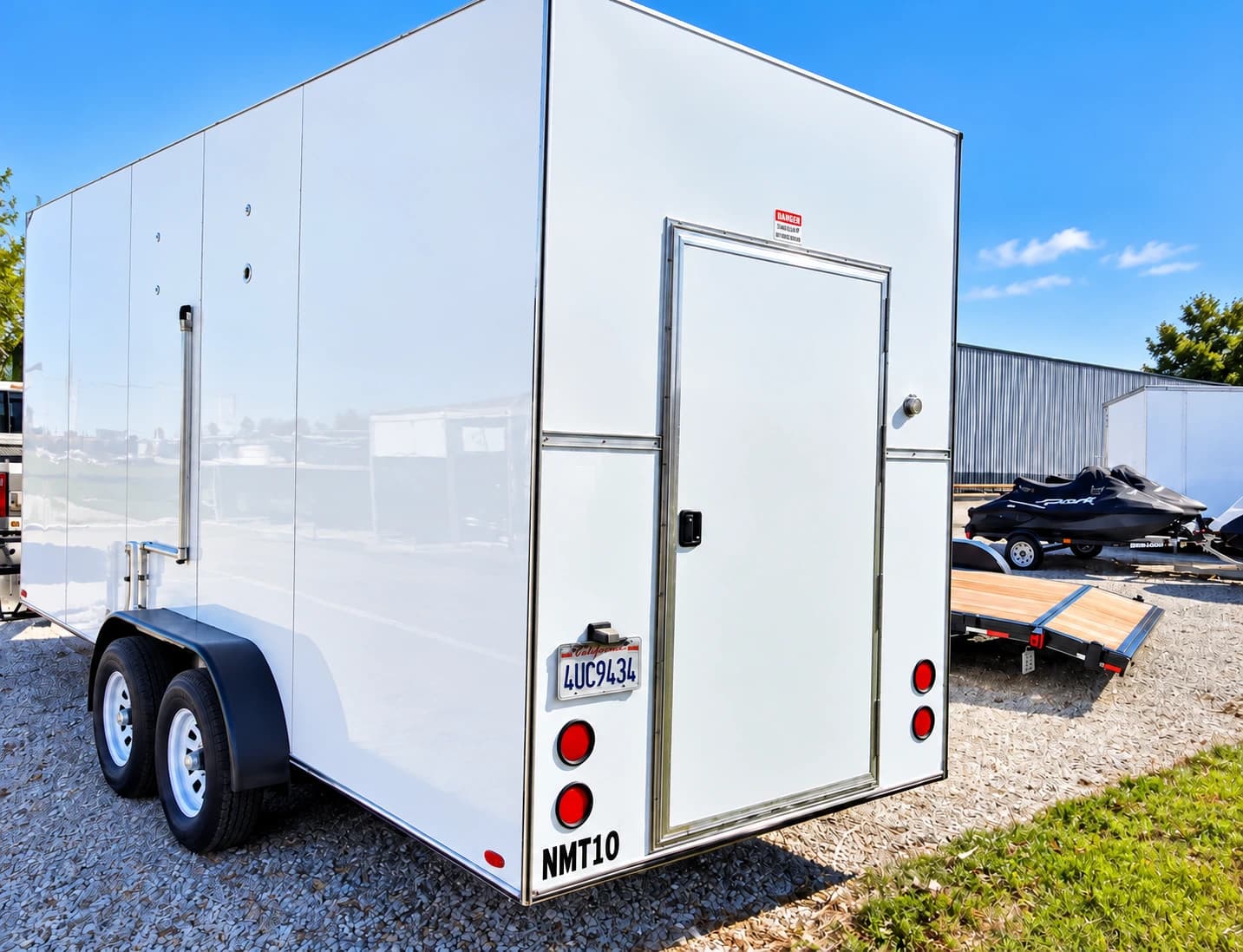
White refrigerated trailer with a rear door parked on a gravel lot
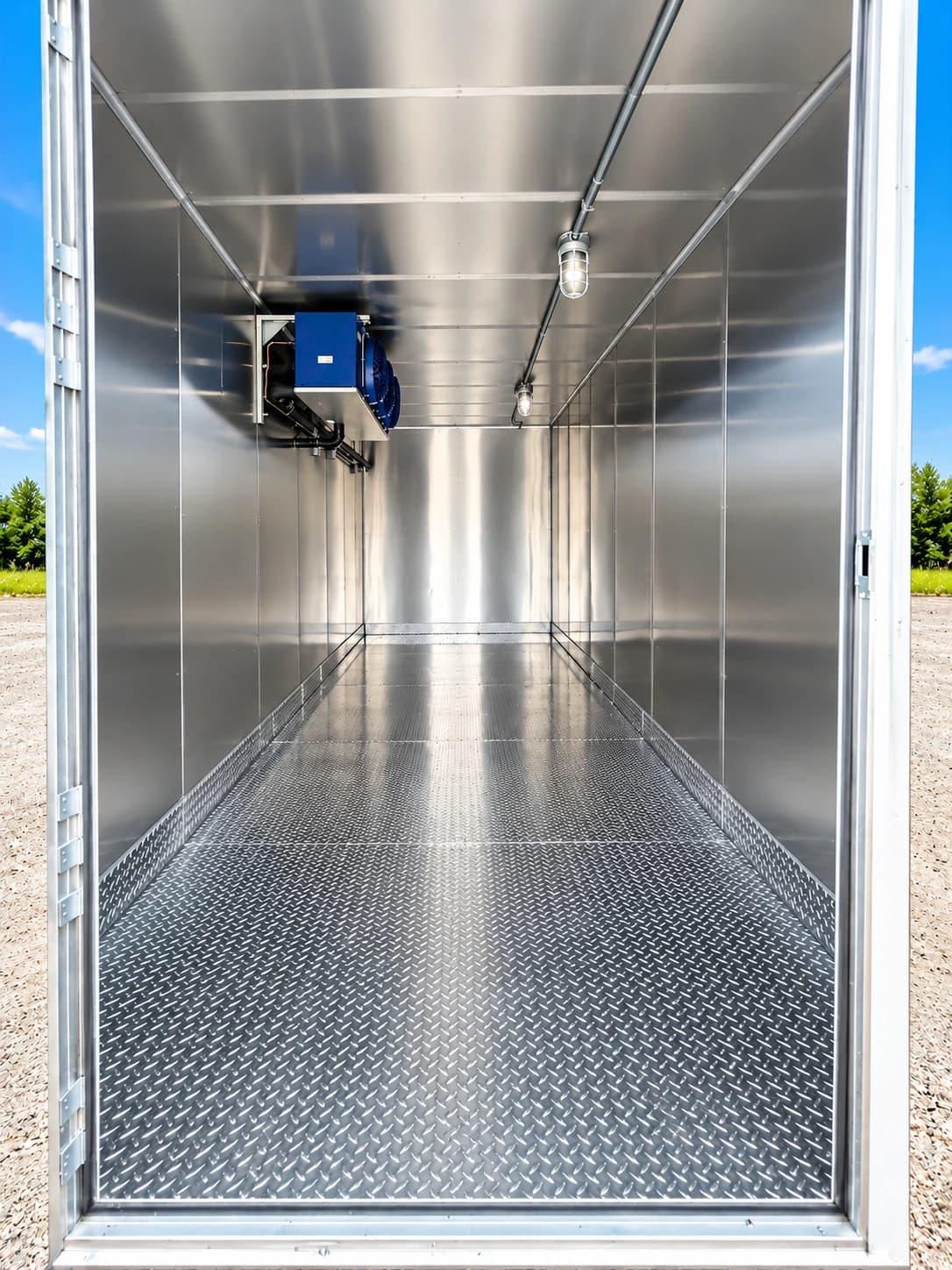
Long stainless steel cold storage interior with a diamond-plate floor and work lights
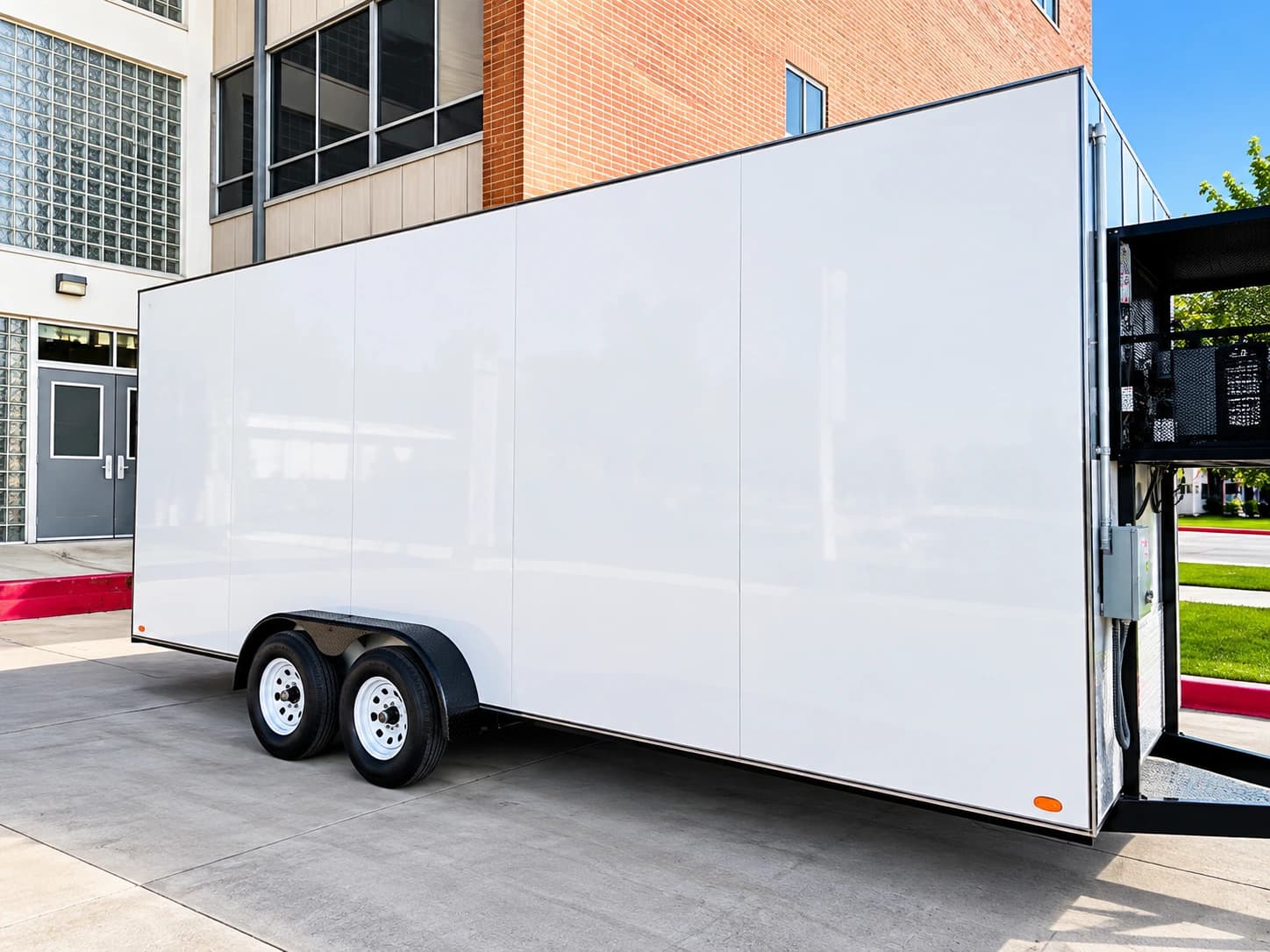
White refrigerated trailer on a paved lot with a power connection panel at the rear

Rental terms at a glance

Rentals run by the week or by the month, with short-term and long-term options, and we answer calls 24 hours a day, 7 days a week. Setup on site takes about 1 hour for a refrigeration unit and about 5 hours for a kitchen or dishwashing trailer; a ramp adds 4 to 6 hours and stairs add 5 to 15 minutes. GPS tracking is possible on request. Delivery, setup, servicing, and minimum terms are confirmed in your quote, and an inquiry does not reserve equipment.

Cold storage down? Call now.

Emergency refrigeration rentals in Ohio.

If a walk-in cooler or freezer has stopped holding temperature, call now. Tell us your city and state, what failed, how much product is at risk, and what power is on site. Keep doors closed to hold the cold while we work out the right trailer or container for you.

Call 24/7: (888) 385-5513

Frequently asked questions

How do I rent a refrigerated trailer in Ohio?

Call (888) 385-5513 or send the quote form with the address, what failed, the temperature you need, and the power at your site. We confirm the unit, availability, delivery, and terms in your quote. An inquiry does not reserve equipment.

Which Ohio cities do you serve?

Service is nationwide, so we serve commercial and industrial customers across Ohio. We list pages for Columbus, Cleveland, Cincinnati, Toledo, Akron, and Cambridge and 14 more cities and towns. If your site is elsewhere in the state, call and we will confirm.

Can I rent a refrigerated container in Ohio for a long project?

Yes. A 20 ft or 40 ft refrigerated container suits renovations and seasonal peaks in Ohio. Rent short term or lease for months, and see the full price rows on each unit page.

Do you rent mobile kitchens and dishwashing trailers in Ohio?

Yes. When a Ohio kitchen is down, we rent mobile kitchens and commercial dishwashing trailers to pair with refrigeration.

Who regulates food safety in Ohio?

Ohio Department of Health (food safety rules in OAC 3701-21, enforced mainly by local health districts) (https://odh.ohio.gov) is the state agency to start with. Local health departments may add their own rules, so check before placing temporary refrigeration or a temporary kitchen.

What to send for a fast quote

  • The city and state where the unit will sit
  • What failed and how much product is at risk
  • Cooler (32°F) or freezer temperature needed
  • Power available at the site: voltage, phase, and amps
  • Access: gate or door width, surface, and where the unit will be placed
  • How long you expect to need it

Prefer to talk? Call (888) 385-5513 any time.

Request availability and a quote

Need help right now? Call (888) 385-5513. An inquiry does not reserve equipment.

Request availability and a quote

Emergency? Call (888) 385-5513 now, 24 hours a day.

Need help right now? Call (888) 385-5513. An inquiry does not reserve equipment.

Call In 24/7