Emergency refrigeration rentals. Open 24/7.

(888) 385-5513

HHrefrigeration

North Carolina Refrigeration Trailer Rentals

Rental refrigeration is available throughout North Carolina. When a walk-in cooler or freezer fails, our refrigerated trailer and container rentals put cold storage on your site, along with mobile kitchens and dishwashing trailers if the kitchen is down too. We list pages for Charlotte, Raleigh, Greensboro, and Durham and 16 more North Carolina cities and towns, and service is nationwide, so a site anywhere in the state is covered. Hospitals, schools, restaurants, grocers, and distributors rent from us, short term or long term. Call 24/7 or request availability and a quote.

Call 24/7: (888) 385-5513

North Carolina cities and towns

20 pages: the 5 largest cities, then 15 smaller towns under 10,000 people. Each page has local delivery planning, emergency support, requirements, and routes.

Cities

Largest cities

Smaller cities and towns

What drives cold-storage demand in North Carolina

Summers are hot and humid, with July afternoon highs near 90 F across most of the state and tropical overnight lows. Winters are mild in the east and south and colder in the mountains, where Boone gets nearly 25 inches of snow a year. Statewide snowfall averages only about 5 inches, but freezing rain and tropical storms are the bigger disruptors.

The hottest stretch runs june to September. The coldest runs december to February. Both extremes strain commercial refrigeration, and both bring calls for emergency cold storage.

Restaurants, grocers, food distributors, and healthcare kitchens in the region often rent a trailer when a compressor fails in the heat.

Weather and hazards

  • Hurricane (June to November, peak August to September): Florence (2018) set a state record of 35.93 inches of tropical-cyclone rainfall, caused about $17 billion in damage and flooded roughly 75,000 structures. Fran (1996) and Hazel (1954) are other major storms. Prolonged outages and flooding after hurricanes can spoil refrigerated food and often create demand for emergency cold storage, temporary kitchens and warewashing. Source
  • Flood (late September (Helene 2024); year-round with heavy rain): Helene (September 2024) brought record rain to the mountains (24.41 inches at Mount Mitchell), more than 100 deaths, dam breaches and mudslides, and severe flooding in towns such as Black Mountain. Mountain flooding can cut power, water and roads for days, which can leave restaurants and food distributors needing temporary refrigeration and kitchens. Source
  • Ice storm (December to February): A December 2002 ice storm left more than 1.3 million people in the Charlotte area without power, some for weeks. In the Piedmont, cold-air damming often causes freezing rain, which can be a bigger concern than snow. Ice-related outages can last long enough to threaten walk-in coolers and freezers and can create a need for backup refrigeration. Source
  • Tornado (March to May (all months possible)): North Carolina averages about 31 tornadoes a year; Raleigh was hit by an F4 in November 1988 and an EF-3 in April 2011. Tornado damage to a building or its power service can put a kitchen out of operation and often creates a short-term need for temporary food service equipment. Source

Power outages

  • The December 2002 ice storm left more than 1.3 million people in the Charlotte area without power, some for weeks. Multi-week outages exceed what most commercial coolers can ride out and can create a need for emergency refrigeration. Source
  • After Hurricane Helene in September 2024, Duke Energy said it would take days to restore the majority of customers in the Upstate and western North Carolina, with most expected back by that Friday. Multi-day outages in mountain communities can strand perishable inventory and create a need for temporary cold storage. Source
  • In Black Mountain, Helene knocked out power, water and sewer for days and flooded Ingles Markets facilities in the town. Loss of both power and water often leaves food businesses unable to run refrigeration or wash dishes, which can create demand for mobile kitchens and warewashing. Source

Food and hospitality

  • North Carolina ranks first nationally in sweet potato and poultry-and-egg production and second in hogs and turkeys, according to NC State Extension. Large livestock, poultry and produce operations depend on cold chain capacity and can need temporary storage at harvest and processing peaks. Source
  • An NCDA&CS official said agricultural exports contributed over $3.3 billion to the state's economy at the end of 2023, with meat and poultry about 30% of exports. Export-oriented meat and poultry shipments pass through cold storage and refrigerated trucking and containers. Source
  • FedEx built a $300 million mid-Atlantic air-cargo hub at Piedmont Triad International Airport in Greensboro (opened 2009), and the city is a Norfolk Southern freight hub. Logistics hubs move temperature-sensitive goods and can create overflow cold storage needs. Source
  • Oak Island's summer population nears 50,000 against 8,396 permanent residents, and Kill Devil Hills is the largest settlement on the Outer Banks. Coastal resort towns see steep summer demand at restaurants and hotels that can exceed fixed refrigeration and kitchen capacity. Source
  • Ingles Markets keeps its headquarters and distribution center in Black Mountain, and Siler City's population grew about 75% from 1990 to 2016 as workers were drawn to poultry processing jobs. Grocery distribution and poultry plants depend on uninterrupted refrigeration and can need temporary capacity during disruptions. Source

Rules, agencies, and roads in North Carolina

We rent to commercial and industrial customers only. Before you place temporary refrigeration or a temporary kitchen in North Carolina, check local rules. The state agency to start with is NC DHHS Division of Public Health, Environmental Health Section (Food Protection and Facilities Branch). For emergency information, see North Carolina Emergency Management.

  • NC DHHS loss-of-power guidance for food establishments says to discard time/temperature control for safety (TCS) foods that have been above 41 F for more than 4 hours and to document what is discarded. A long outage can make emergency cold storage necessary to keep TCS food within safe limits. Source
  • The Food Protection and Facilities Branch regulates mobile food units and pushcarts; local health departments review plans, commonly require a commissary, and require an LP-gas inspection by NCDA before a permit is issued. A mobile kitchen in North Carolina generally goes through county plan review, so the local environmental health office should be contacted first. Source
  • Temporary food establishment rules are applied by county: Rowan County issues permits for events of no more than 15 days, and Jackson County asks for applications at least 15 calendar days before the event. Temporary kitchen setups for events should allow lead time and confirm the county's day limits. Source
  • Buncombe County's inclement-weather plan says a food establishment with loss of power, water, water pressure, flooding or sewage problems needs an inspection before resuming food preparation. After an outage or flood, temporary refrigeration or a mobile kitchen may need to be inspected before it can be used for service. Source
  • Mecklenburg County notes that plans for franchised or chain food establishments are reviewed by the NCDHHS Plan Review Unit rather than by the county. Chain operators using a temporary kitchen may face state-level plan review. Source

Main roads

  • I-95: Passes through the eastern side of the state; Dunn has access at Exits 72 and 73.
  • I-85: Runs through Oxford (exits 202, 204, 206), 29 miles northeast of Durham, and continues to Petersburg, Virginia; also intersects I-40 and I-73 at Greensboro.
  • I-40: Crosses the state through Raleigh, Durham, Greensboro, Winston-Salem, Conover and Black Mountain, which is 15 miles east of Asheville.
  • I-73 and I-74: I-73 meets I-40 and I-85 at Greensboro; I-74 serves Winston-Salem.
  • I-440 and I-540: Raleigh Beltline (with I-40) and the roughly 70-mile outer loop around Wake County.
  • US-70: Connects Morehead City on the coast with Raleigh and runs through Black Mountain in the west.

Events that raise demand

  • North Carolina State Fair (mid-October): The 11-day fair in Raleigh drew 998,926 attendees in 2024 and has topped 1 million in some years. A one-million-visitor fair with many food vendors creates large temporary refrigeration and food service demand.
  • Carolina Classic Fair (autumn): Held each autumn in Winston-Salem, the fair is described as one of the most-visited fairs in North America. Fair concessions often need extra cold storage and temporary kitchens.
  • Big Rock Blue Marlin Tournament (June): The Morehead City tournament, established in 1957, holds its 2027 dates as June 11-20 and fills hotels, restaurants and shops with anglers and spectators. A week-long tournament can strain coastal restaurant and event kitchen capacity.

Refrigeration equipment to rent in North Carolina

Each card shows the lowest printed price. Open a unit for the full price row.

Equipment

12 ft Refrigerated Trailer

Starting from $1,895 / month

The smallest trailer in the lineup. It fits tight lots and loading areas when a small walk-in cooler or freezer goes down.

View details

20 ft Refrigerated Trailer

Starting from $1,895 / month

The workhorse. A 20 ft trailer comes as a 32°F cooler or as a low-temperature freezer configuration, so you can match what failed.

View details

40 ft Refrigerated Container

Starting from $3,995 / month

The largest cold storage option. It takes pallets and bulk product for food distribution, disaster response, and large facilities.

View details
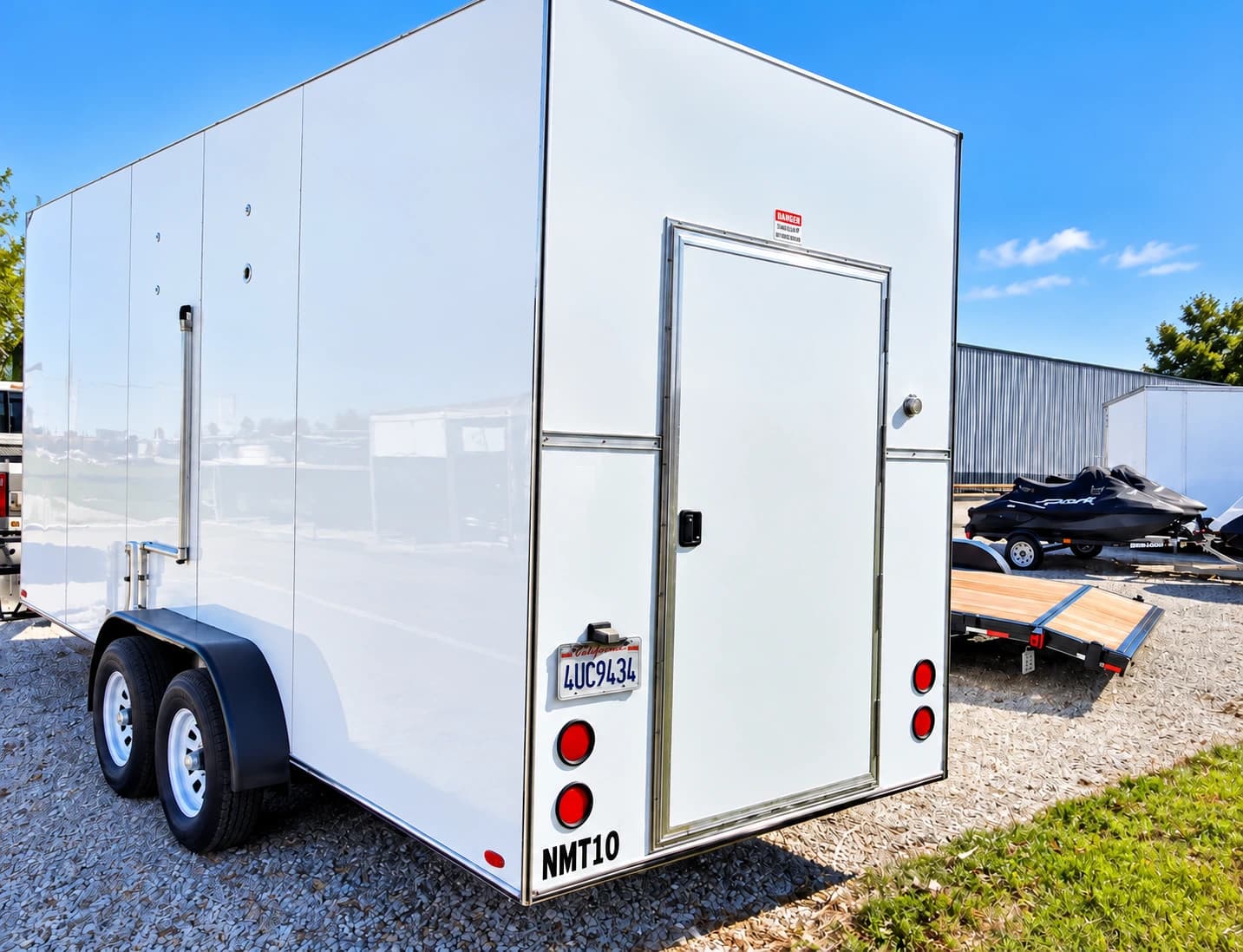
White refrigerated trailer with a rear door parked on a gravel lot
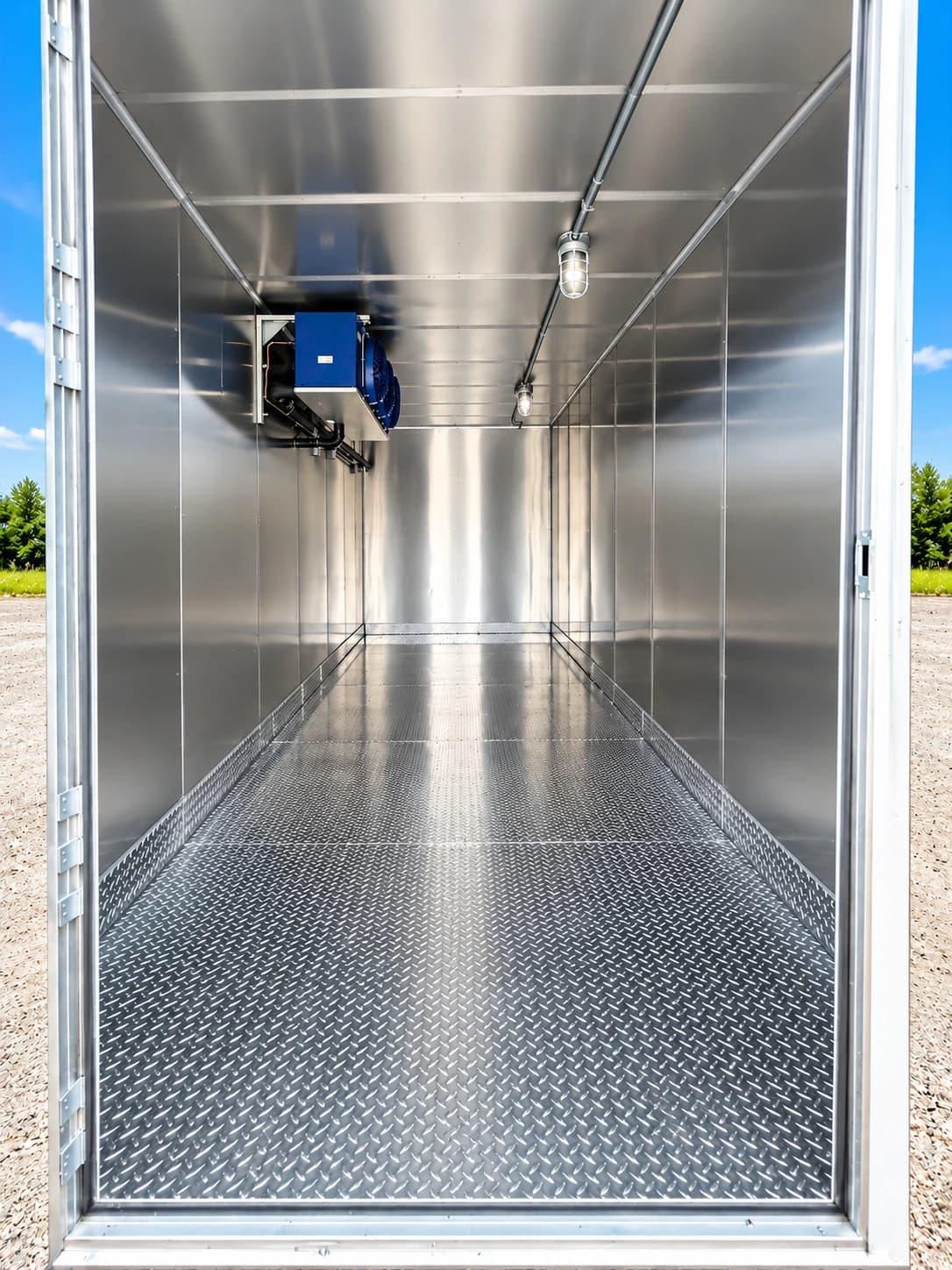
Long stainless steel cold storage interior with a diamond-plate floor and work lights
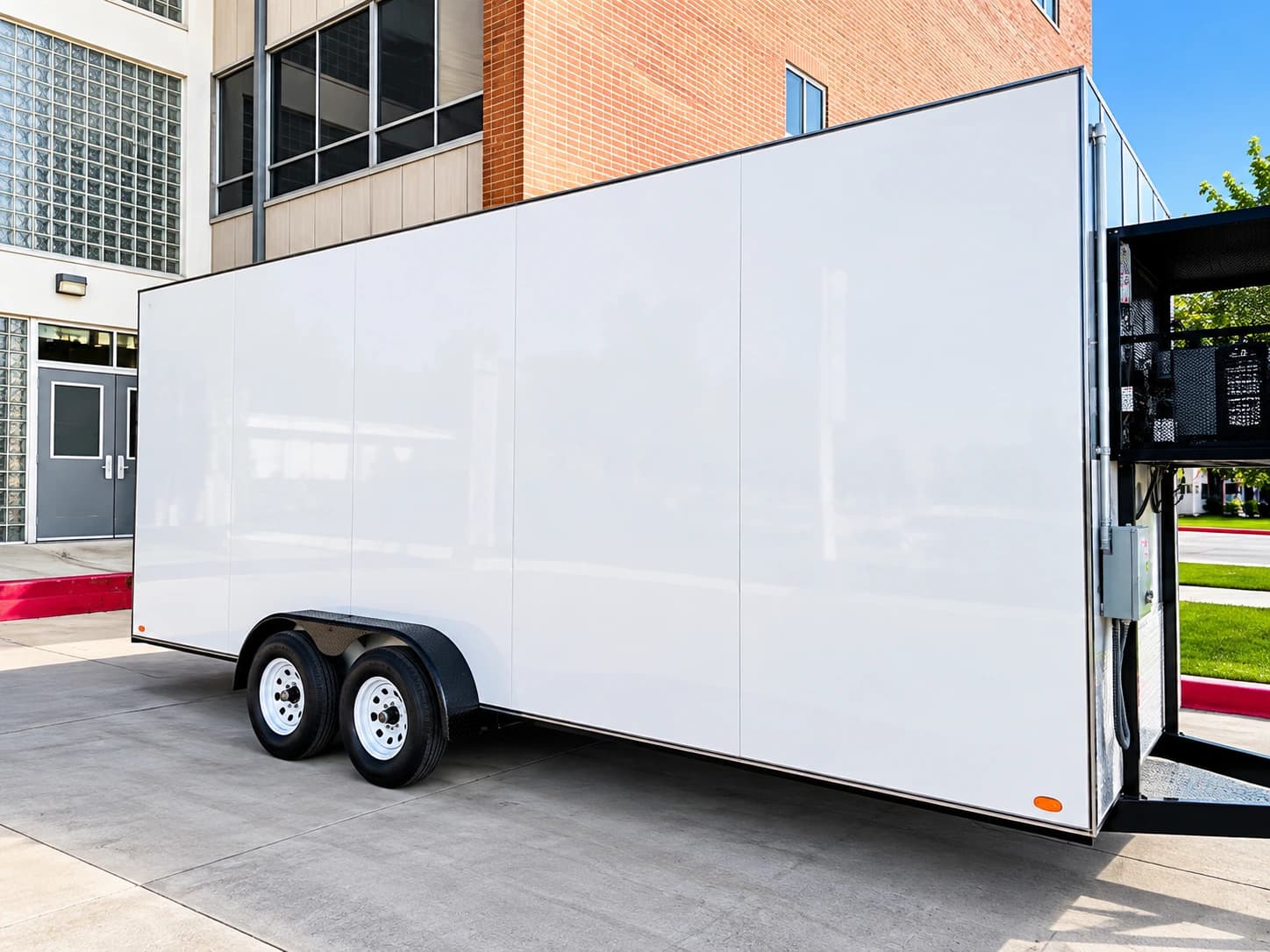
White refrigerated trailer on a paved lot with a power connection panel at the rear

Rental terms at a glance

Rentals run by the week or by the month, with short-term and long-term options, and we answer calls 24 hours a day, 7 days a week. Setup on site takes about 1 hour for a refrigeration unit and about 5 hours for a kitchen or dishwashing trailer; a ramp adds 4 to 6 hours and stairs add 5 to 15 minutes. GPS tracking is possible on request. Delivery, setup, servicing, and minimum terms are confirmed in your quote, and an inquiry does not reserve equipment.

Cold storage down? Call now.

Emergency refrigeration rentals in North Carolina.

If a walk-in cooler or freezer has stopped holding temperature, call now. Tell us your city and state, what failed, how much product is at risk, and what power is on site. Keep doors closed to hold the cold while we work out the right trailer or container for you.

Call 24/7: (888) 385-5513

Frequently asked questions

How do I rent a refrigerated trailer in North Carolina?

Call (888) 385-5513 or send the quote form with the address, what failed, the temperature you need, and the power at your site. We confirm the unit, availability, delivery, and terms in your quote. An inquiry does not reserve equipment.

Which North Carolina cities do you serve?

Service is nationwide, so we serve commercial and industrial customers across North Carolina. We list pages for Charlotte, Raleigh, Greensboro, Durham, Winston-Salem, and Morehead City and 14 more cities and towns. If your site is elsewhere in the state, call and we will confirm.

Can I rent a refrigerated container in North Carolina for a long project?

Yes. A 20 ft or 40 ft refrigerated container suits renovations and seasonal peaks in North Carolina. Rent short term or lease for months, and see the full price rows on each unit page.

Do you rent mobile kitchens and dishwashing trailers in North Carolina?

Yes. When a North Carolina kitchen is down, we rent mobile kitchens and commercial dishwashing trailers to pair with refrigeration.

Who regulates food safety in North Carolina?

NC DHHS Division of Public Health, Environmental Health Section (Food Protection and Facilities Branch) (https://ehs.dph.ncdhhs.gov/faf/) is the state agency to start with. Local health departments may add their own rules, so check before placing temporary refrigeration or a temporary kitchen.

What to send for a fast quote

  • The city and state where the unit will sit
  • What failed and how much product is at risk
  • Cooler (32°F) or freezer temperature needed
  • Power available at the site: voltage, phase, and amps
  • Access: gate or door width, surface, and where the unit will be placed
  • How long you expect to need it

Prefer to talk? Call (888) 385-5513 any time.

Request availability and a quote

Need help right now? Call (888) 385-5513. An inquiry does not reserve equipment.

Request availability and a quote

Emergency? Call (888) 385-5513 now, 24 hours a day.

Need help right now? Call (888) 385-5513. An inquiry does not reserve equipment.

Call In 24/7