Emergency refrigeration rentals. Open 24/7.

(888) 385-5513

HHrefrigeration

South Carolina Refrigeration Trailer Rentals

Rental refrigeration is available throughout South Carolina. When a walk-in cooler or freezer fails, our refrigerated trailer and container rentals put cold storage on your site, along with mobile kitchens and dishwashing trailers if the kitchen is down too. We list pages for Charleston, Columbia, North Charleston, and Mount Pleasant and 16 more South Carolina cities and towns, and service is nationwide, so a site anywhere in the state is covered. Hospitals, schools, restaurants, grocers, and distributors rent from us, short term or long term. Call 24/7 or request availability and a quote.

Call 24/7: (888) 385-5513

South Carolina cities and towns

20 pages: the 5 largest cities, then 15 smaller towns under 10,000 people. Each page has local delivery planning, emergency support, requirements, and routes.

Cities

Largest cities

Smaller cities and towns

What drives cold-storage demand in South Carolina

Summers are hot and humid, with daytime highs near 90 F across most of the state, overnight lows near 70 F and relative humidity around 74 to 79 percent in Greenville and Charleston. Winters are mild; the coast averages highs near 60 F and the Piedmont near 50 F, with freezing rain more common than snow around and southeast of Columbia. The statewide record low is -19 F.

The hottest stretch runs june to September. The coldest runs december to February. Both extremes strain commercial refrigeration, and both bring calls for emergency cold storage.

Restaurants, grocers, food distributors, and healthcare kitchens in the region often rent a trailer when a compressor fails in the heat.

Weather and hazards

  • Hurricane (June to November, peak early August to early October): Hazel (1954) and Hugo (1989) both struck as Category 4 storms; Hugo caused over $2.8 billion in damage across the Lowcountry. Hurricane Ian made landfall near Georgetown in September 2022. Coastal evacuations and long outages can leave restaurants and food distributors with spoiled stock and can create a need for emergency cold storage or temporary kitchens. Source
  • Flood (year-round; tropical systems late summer to fall): Historic flooding in October 2015 caused widespread damage across the Columbia area, disrupted the University of South Carolina and forced a Gamecocks home football game to move. Floodwater and power loss can force food businesses to close and discard food, which often creates demand for temporary refrigeration, kitchens and warewashing. Source
  • Tornado (spring, with a secondary peak in November): The state averages about 14 tornadoes a year. An EF3 hit Seneca on April 13, 2020, and an EF2 damaged Manning on April 5, 2022. A tornado that damages a building or its electrical service can put a kitchen or cooler out of use and often creates a short-term need for temporary equipment. Source
  • Winter storm (December to February): Freezing rain is more common than snow in the Midlands; Rock Hill received 22 inches of snow in February 2004 and schools closed for a week. Winter Storm Pax hit in 2014. Ice and heavy snow in a mild-winter state can bring prolonged power loss that threatens refrigerated inventory. Source
  • Earthquake (any time): The 1886 Charleston earthquake (about magnitude 7.0) damaged roughly 2,000 buildings. Earthquake damage to buildings and utilities in the Lowcountry can disrupt power and food operations for extended periods. Source

Power outages

  • South Carolina had more customers without power than any other Southeastern state in the days after Hurricane Helene (September 2024), and about 624,000 customers were still dark days later. Multi-day outages across the Upstate and Midlands can spoil refrigerated stock and often create demand for emergency cold storage. Source
  • Two tornadoes on April 10, 2009 left most of Abbeville without power. Small-town outages after severe storms can leave grocers and restaurants without refrigeration. Source
  • Hurricane Hugo (September 1989) brought sustained winds over 90 mph to Rock Hill and schools there closed for weeks. Inland communities can also face long hurricane-related disruptions to power and services. Source

Food and hospitality

  • The South Carolina Ports Authority opened a $14 million refrigerated container service area at Wando Welch Terminal; loaded reefer volume has grown 86% since 2011, driven by nearby pork and poultry exporters. Reefer growth at the port can create overflow cold-storage and power-backup needs for exporters and importers. Source
  • Lexington County is the state's top poultry producer, with large processors Amick Farms and Columbia Farms near Batesburg-Leesville. Poultry processing depends on continuous refrigeration, and plants can need temporary cold storage during outages or downtime. Source
  • Georgetown's port is South Carolina's second-largest seaport, handling over 960,000 tons of materials a year, and Charleston's port is one of the busiest in the country. Port activity brings cargo handling and distribution that can use extra cold storage at peaks. Source
  • Charleston's economy is built on tourism, the port and logistics, aerospace and information technology. Tourism drives seasonal restaurant and event catering demand that can exceed fixed kitchen capacity. Source

Rules, agencies, and roads in South Carolina

We rent to commercial and industrial customers only. Before you place temporary refrigeration or a temporary kitchen in South Carolina, check local rules. The state agency to start with is South Carolina Department of Agriculture, Retail Food Safety. For emergency information, see South Carolina Emergency Management Division.

  • The South Carolina Department of Agriculture publishes its own 2024 guidance for mobile food establishments under its retail food safety program. A mobile kitchen operating in South Carolina is reviewed against the Department of Agriculture's retail food requirements. Source
  • Under Regulation 61-25 (Retail Food Establishments), no person or mobile unit may serve time/temperature control for safety food at a temporary food service establishment unless the sponsoring entity obtains authorization from the Department. Event organizers and temporary kitchens serving TCS food need sponsor authorization before the event. Source
  • The Department of Agriculture maintains an environmental emergency recovery page with retail food establishment guidance for recovering from flooding and other emergencies. Businesses that lose power or are flooded can use it to decide what must be discarded and what is needed to reopen. Source

Main roads

  • I-95: Runs through the Lowcountry and Pee Dee: Walterboro (exits 53, 57), Manning (exits 115, 119, 122) and Ridgeland (exits 21, 22).
  • I-26: Links Charleston and North Charleston with Columbia.
  • I-20: Major east-west interstate through Columbia.
  • I-77: Runs through Columbia and Rock Hill (exits 73-82) toward Charlotte.
  • I-85: Serves Rock Hill (exit 102) and the Upstate.
  • I-526: Mark Clark Expressway around North Charleston and Charleston.
  • US-17: Coastal route through Mount Pleasant and Georgetown; Georgetown to Charleston is about 60 miles.

Events that raise demand

  • South Carolina State Fair (October): The 12-day fair at the fairgrounds in Columbia draws over 400,000 fairgoers a year. A fair of this size relies on temporary food vendors that often need extra refrigeration and cooking capacity.
  • Spoleto Festival USA (late spring (May to June)): A 17-day performing arts festival in Charleston with more than 150 performances. Festival crowds raise demand for caterers and pop-up dining that can need temporary kitchens and cold storage.
  • South Carolina Poultry Festival (second Saturday in May): Held in Batesburg-Leesville since 1987 with a parade, carnival, live music and fireworks. A community festival centered on a poultry-producing county can use temporary food service equipment.

Refrigeration equipment to rent in South Carolina

Each card shows the lowest printed price. Open a unit for the full price row.

Equipment

12 ft Refrigerated Trailer

Starting from $1,895 / month

The smallest trailer in the lineup. It fits tight lots and loading areas when a small walk-in cooler or freezer goes down.

View details

20 ft Refrigerated Trailer

Starting from $1,895 / month

The workhorse. A 20 ft trailer comes as a 32°F cooler or as a low-temperature freezer configuration, so you can match what failed.

View details

40 ft Refrigerated Container

Starting from $3,995 / month

The largest cold storage option. It takes pallets and bulk product for food distribution, disaster response, and large facilities.

View details
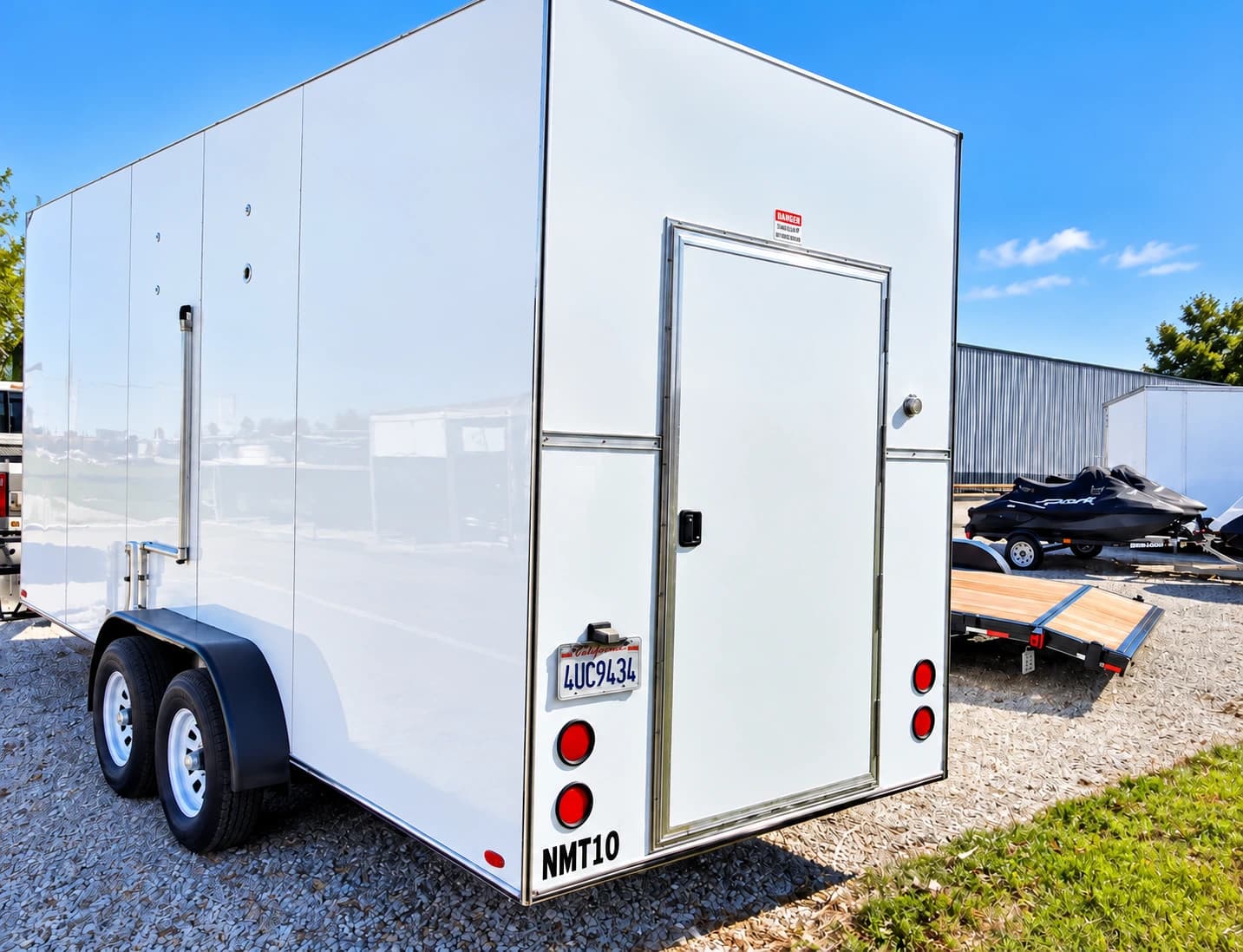
White refrigerated trailer with a rear door parked on a gravel lot
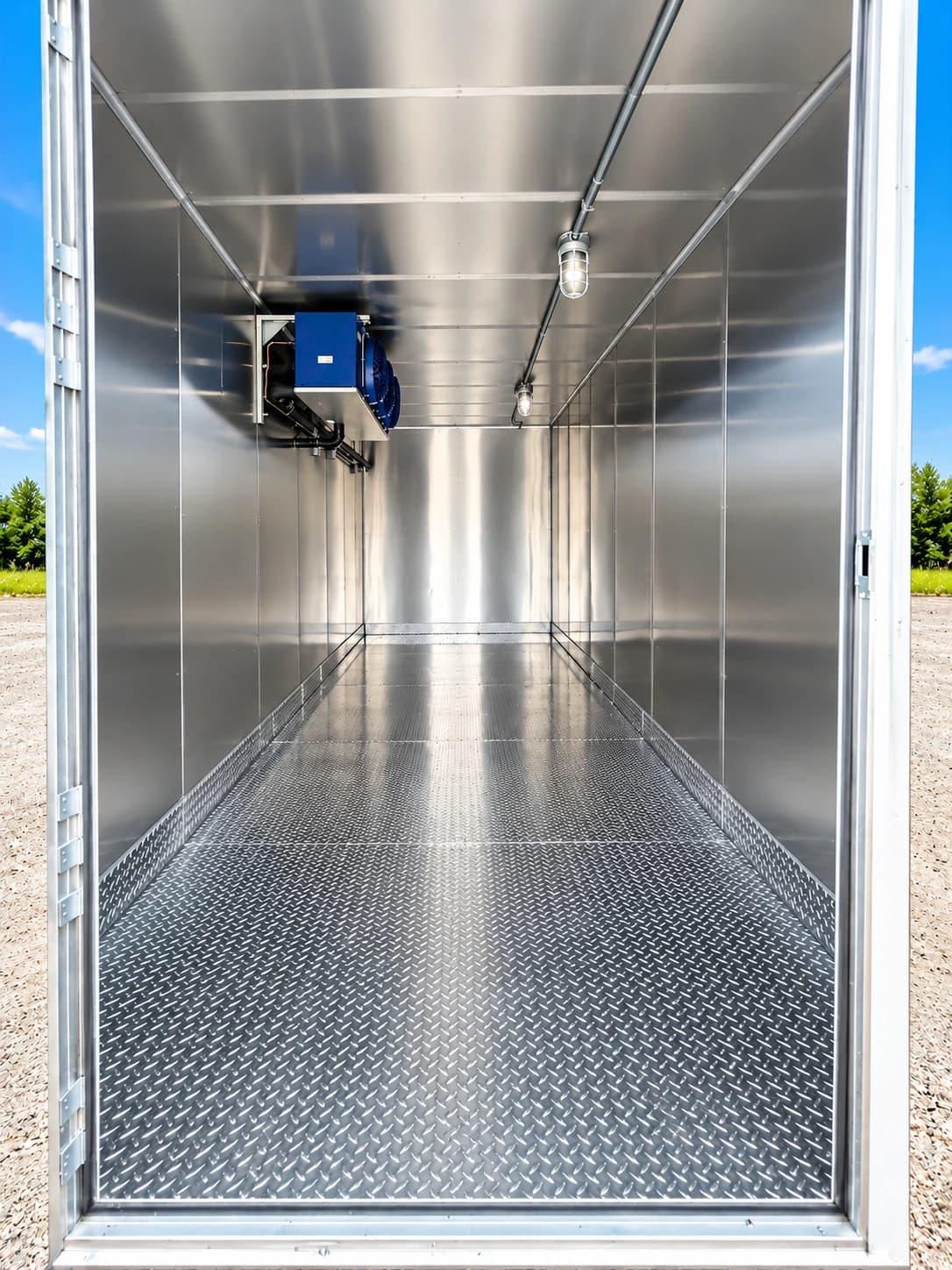
Long stainless steel cold storage interior with a diamond-plate floor and work lights
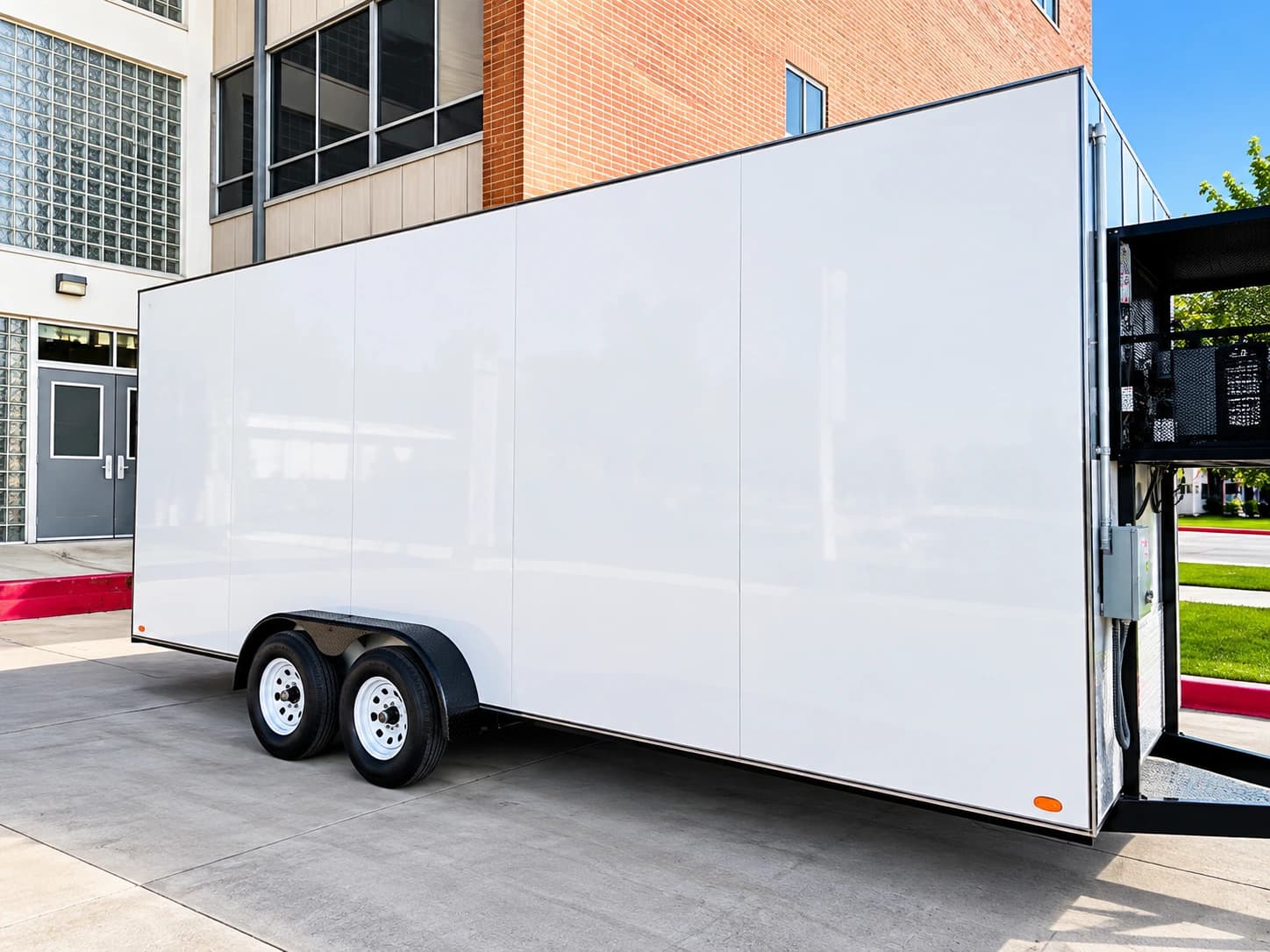
White refrigerated trailer on a paved lot with a power connection panel at the rear

Rental terms at a glance

Rentals run by the week or by the month, with short-term and long-term options, and we answer calls 24 hours a day, 7 days a week. Setup on site takes about 1 hour for a refrigeration unit and about 5 hours for a kitchen or dishwashing trailer; a ramp adds 4 to 6 hours and stairs add 5 to 15 minutes. GPS tracking is possible on request. Delivery, setup, servicing, and minimum terms are confirmed in your quote, and an inquiry does not reserve equipment.

Cold storage down? Call now.

Emergency refrigeration rentals in South Carolina.

If a walk-in cooler or freezer has stopped holding temperature, call now. Tell us your city and state, what failed, how much product is at risk, and what power is on site. Keep doors closed to hold the cold while we work out the right trailer or container for you.

Call 24/7: (888) 385-5513

Frequently asked questions

How do I rent a refrigerated trailer in South Carolina?

Call (888) 385-5513 or send the quote form with the address, what failed, the temperature you need, and the power at your site. We confirm the unit, availability, delivery, and terms in your quote. An inquiry does not reserve equipment.

Which South Carolina cities do you serve?

Service is nationwide, so we serve commercial and industrial customers across South Carolina. We list pages for Charleston, Columbia, North Charleston, Mount Pleasant, Rock Hill, and Laurens and 14 more cities and towns. If your site is elsewhere in the state, call and we will confirm.

Can I rent a refrigerated container in South Carolina for a long project?

Yes. A 20 ft or 40 ft refrigerated container suits renovations and seasonal peaks in South Carolina. Rent short term or lease for months, and see the full price rows on each unit page.

Do you rent mobile kitchens and dishwashing trailers in South Carolina?

Yes. When a South Carolina kitchen is down, we rent mobile kitchens and commercial dishwashing trailers to pair with refrigeration.

Who regulates food safety in South Carolina?

South Carolina Department of Agriculture, Retail Food Safety (https://agriculture.sc.gov/retail-food-safety) is the state agency to start with. Local health departments may add their own rules, so check before placing temporary refrigeration or a temporary kitchen.

What to send for a fast quote

  • The city and state where the unit will sit
  • What failed and how much product is at risk
  • Cooler (32°F) or freezer temperature needed
  • Power available at the site: voltage, phase, and amps
  • Access: gate or door width, surface, and where the unit will be placed
  • How long you expect to need it

Prefer to talk? Call (888) 385-5513 any time.

Request availability and a quote

Need help right now? Call (888) 385-5513. An inquiry does not reserve equipment.

Request availability and a quote

Emergency? Call (888) 385-5513 now, 24 hours a day.

Need help right now? Call (888) 385-5513. An inquiry does not reserve equipment.

Call In 24/7