Emergency refrigeration rentals. Open 24/7.

(888) 385-5513

HHrefrigeration

Arizona Refrigeration Trailer Rentals

Rental refrigeration is available throughout Arizona. When a walk-in cooler or freezer fails, our refrigerated trailer and container rentals put cold storage on your site, along with mobile kitchens and dishwashing trailers if the kitchen is down too. We list pages for Phoenix, Tucson, Mesa, and Chandler and 16 more Arizona cities and towns, and service is nationwide, so a site anywhere in the state is covered. Hospitals, schools, restaurants, grocers, and distributors rent from us, short term or long term. Call 24/7 or request availability and a quote.

Call 24/7: (888) 385-5513

Arizona cities and towns

20 pages: the 5 largest cities, then 15 smaller towns under 10,000 people. Each page has local delivery planning, emergency support, requirements, and routes.

Cities

Largest cities

Smaller cities and towns

What drives cold-storage demand in Arizona

The Sonoran Desert is extremely hot in summer: Phoenix's average July high is about 106 F and Yuma's reaches about 107 F. Monsoon thunderstorms bring wind, blowing dust and occasional hail. The high country is cold, with Flagstaff's January days averaging 14 to 41 F and heavy snow falling in the mountains from November through March.

The hottest stretch runs may to September. The coldest runs december to February (high country). Both extremes strain commercial refrigeration, and both bring calls for emergency cold storage.

Restaurants, hotels, grocers, and large event venues often rent refrigeration trailers when equipment fails during peak heat.

Weather and hazards

  • Heat wave (May to September): Phoenix averages 111 days a year at 100 F or higher, and 2024 set a record of 70 days at 110 F or higher. Extreme heat can overwhelm aging refrigeration equipment and quickly spoil perishables, which often creates a need for temporary refrigerated trailers. Source
  • Flood (July to September (monsoon)): Monsoon storms bring haboob dust storms, flash floods and hail to the Phoenix area, and many parts of Tucson lack storm sewers, which makes flash flooding a hazard. Monsoon outages and flooding can interrupt refrigeration and force kitchens to rely on temporary facilities. Source
  • Wildfire (May to July): The 2011 Wallow Fire burned over 538,000 acres in the White Mountains, becoming Arizona's largest on record and forcing evacuations in Alpine, Eagar and Springerville; the 2014 Slide Fire burned about 21,000 acres near Sedona. Wildfire evacuations can leave food businesses without power or staff and can create demand for temporary cold storage and field kitchens for responders. Source
  • Winter storm (November to March): Heavy snow falls in the central, northern and southeastern mountains; Williams averages about 65 inches of snow a year and the Grand Canyon North Rim about 144 inches. Snow and cold can disrupt deliveries and power to mountain-town restaurants and lodges. Source

Power outages

  • On September 8, 2011, a failed capacitor bank at an APS substation near Yuma set off a chain of grid events that left nearly seven million people in the region without power for roughly 13 hours. A sudden regional blackout can spoil large amounts of refrigerated food; restaurants and grocery stores discarded large quantities of food, with perishable losses estimated at $12 to $18 million. Source
  • Phoenix averages 111 days a year at 100 F or higher and set a record of 70 days at 110 F or higher in 2024. Prolonged extreme heat can strain refrigeration equipment and local power supply, which can make backup cold storage valuable for food businesses. Source

Food and hospitality

  • Yuma County supplies about 90 percent of the leafy vegetables grown in the U.S. from November to March, and Yuma grows more than 175 crop types. Winter leafy-greens harvest depends on cold storage and cooling, so peak season can create demand for temporary refrigerated capacity. Source
  • Arizona agriculture contributed more than $23.3 billion in 2018, with more than 205,000 dairy cows producing about 4.2 billion pounds of milk a year. Dairy and meat production rely on continuous refrigeration and can need backup cold storage during outages or expansions. Source
  • Arizona has the world's largest pecan grove, which produced about 22 million pounds worth $55 million in 2016. Nut and produce harvests can need seasonal cold storage. Source
  • The Cactus League is estimated to generate more than $300 million a year for the Phoenix area, and the Phoenix metro economy grew from agriculture and copper into high-tech manufacturing and tourism. Tourism and hospitality demand can create seasonal needs for temporary kitchens and cold storage. Source
  • Page draws over 3 million visitors a year to Glen Canyon National Recreation Area and Lake Powell, and Williams hosts the Grand Canyon Railway to Grand Canyon Village. Gateway tourism towns with limited local food infrastructure can need temporary kitchens during peak seasons. Source

Rules, agencies, and roads in Arizona

We rent to commercial and industrial customers only. Before you place temporary refrigeration or a temporary kitchen in Arizona, check local rules. The state agency to start with is Arizona Department of Health Services (ADHS), Food Safety and Environmental Services. For emergency information, see Arizona Department of Emergency and Military Affairs (DEMA), Division of Emergency Management.

  • Arizona's state food sanitation rules are in Arizona Administrative Code Title 9, Chapter 8, Article 1, which includes sections on food, equipment and utensils, physical facilities and a dedicated section for mobile food units (R9-8-110). Mobile kitchens and temporary setups need to meet these equipment, water and facility standards. Source
  • ADHS publishes food safety resources including Food Safety at Arizona's Special Events, Safe Food Temperatures and Cleaning and Sanitizing guidance. These resources apply to temporary events, cold holding and warewashing sanitizing at temporary kitchens. Source
  • Federal CDC guidance says a closed refrigerator keeps food safe about 4 hours without power and a full freezer about 48 hours, and that perishable food above 40 F should be discarded. These time limits are why food businesses often look for backup refrigeration quickly during an extended outage. Source

Main roads

  • I-10: About 392 miles across southern Arizona through Quartzsite, Phoenix, Casa Grande, Tucson and Benson; shares a short concurrency with I-17 in central Phoenix.
  • I-17: About 146 miles from Phoenix to Flagstaff, climbing from about 1,100 feet to 7,000 feet.
  • I-40: About 359 miles across northern Arizona through Kingman, Williams, Flagstaff, Winslow and Holbrook, largely following old Route 66.
  • I-8: Runs from Yuma through Gila Bend to I-10 near Casa Grande; the Arizona portion is about 178 miles.
  • US-60: The Superstition Freeway runs between Apache Junction and Phoenix through Mesa and serves Wickenburg and Globe.
  • US-93: Begins in Wickenburg and runs 129 miles northwest to Kingman.

Events that raise demand

  • Cactus League Spring Training (February to March): Fifteen MLB teams train in Arizona, with a league attendance record of 1.59 million in 2011 and an estimated $300 million-plus a year for the Phoenix area. Large crowds and stadium concessions can raise demand for temporary kitchens, cold storage and warewashing.
  • Tucson Gem and Mineral Show (Late January to February): The main show, held since 1955, fills 181,000 square feet at the Tucson Convention Center and draws about 1,300 dealers, alongside satellite shows around Tucson. Large trade-show crowds can drive demand for temporary food service and cold storage.
  • Chandler Ostrich Festival (March): Chandler holds an annual Ostrich Festival at Tumbleweed Park. Festival food vendors can use temporary refrigeration, kitchens and dishwashing.
  • Polar Express train rides at Williams (December to January): The Grand Canyon Railway runs Polar Express rides from Williams from December through January. Seasonal tourist surges in small towns can create demand for temporary kitchens and cold storage.

Refrigeration equipment to rent in Arizona

Each card shows the lowest printed price. Open a unit for the full price row.

Equipment

12 ft Refrigerated Trailer

Starting from $1,895 / month

The smallest trailer in the lineup. It fits tight lots and loading areas when a small walk-in cooler or freezer goes down.

View details

20 ft Refrigerated Trailer

Starting from $1,895 / month

The workhorse. A 20 ft trailer comes as a 32°F cooler or as a low-temperature freezer configuration, so you can match what failed.

View details

40 ft Refrigerated Container

Starting from $3,995 / month

The largest cold storage option. It takes pallets and bulk product for food distribution, disaster response, and large facilities.

View details

Arizona in the Southwest

Service is available across the whole region. See the Southwest page, or go to a neighboring state:
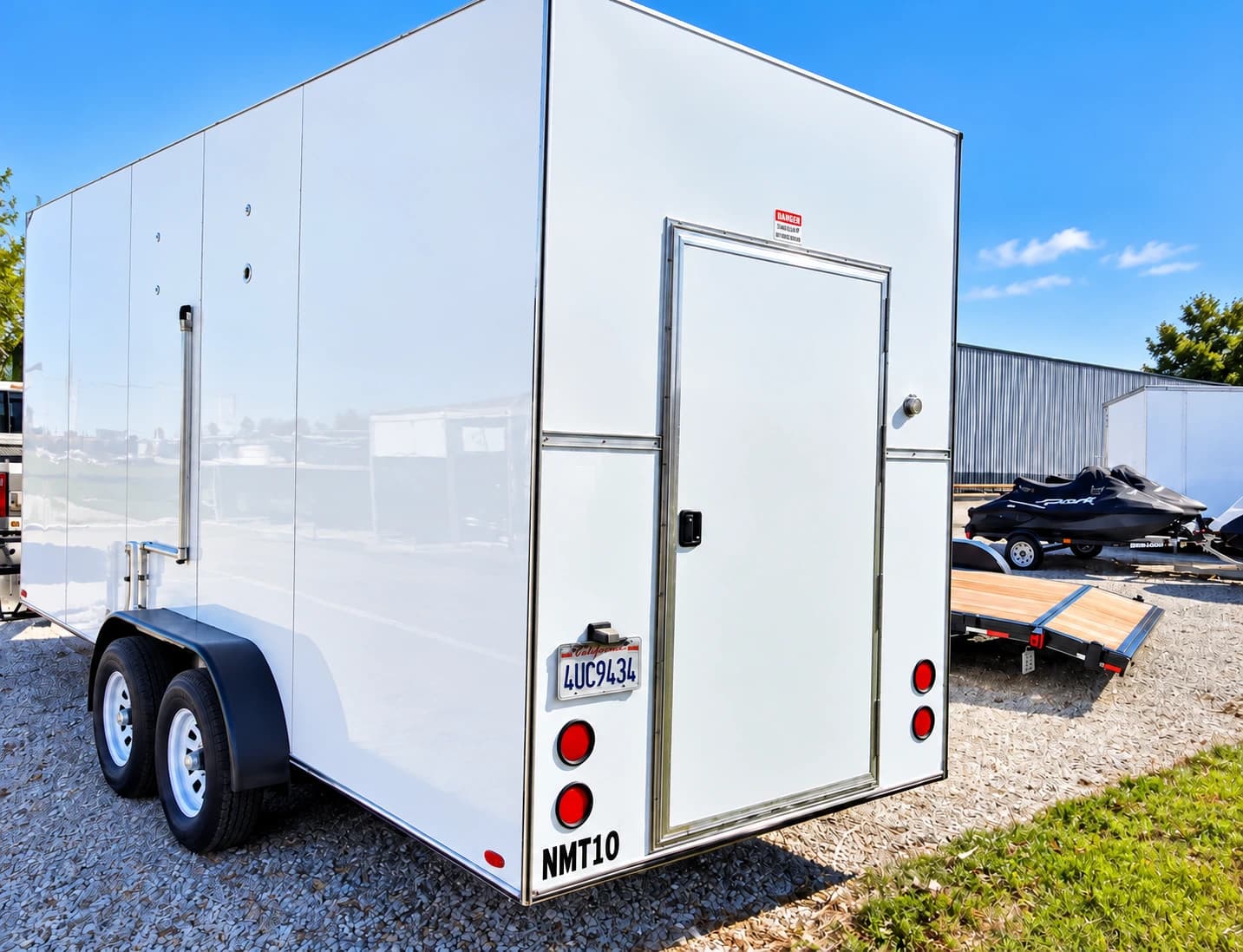
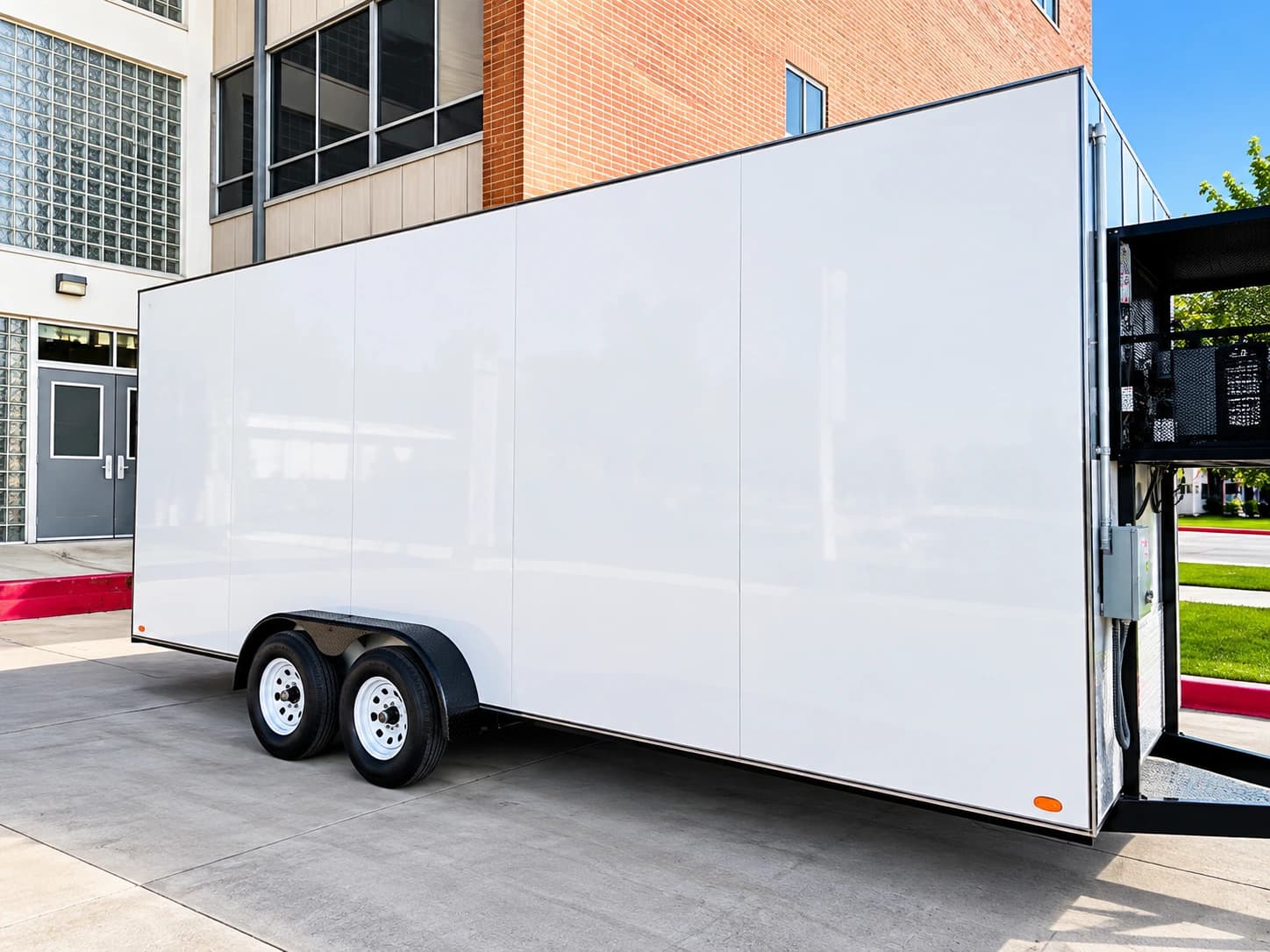
White refrigerated trailer with a rear door parked on a gravel lot
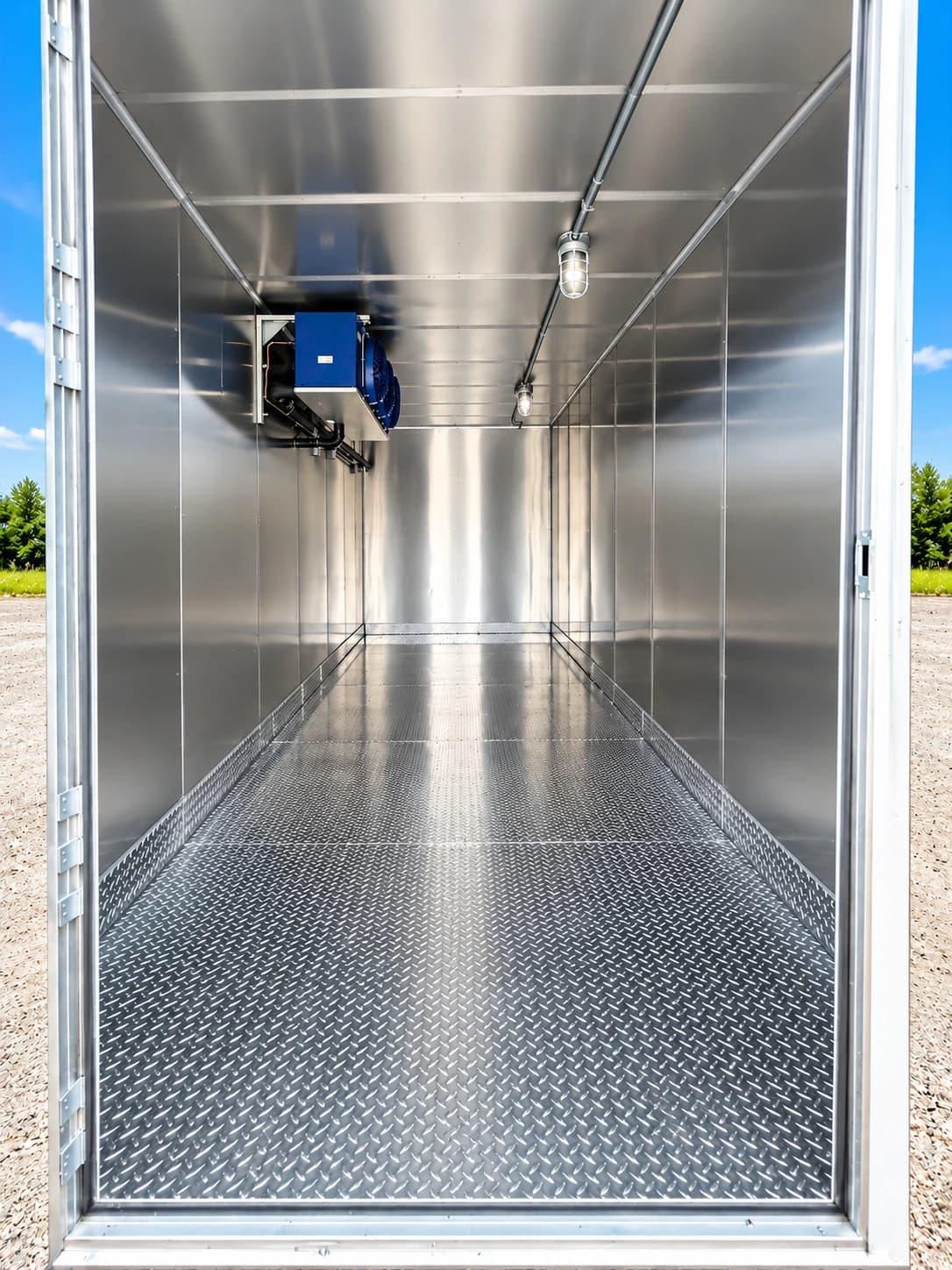
Long stainless steel cold storage interior with a diamond-plate floor and work lights
White refrigerated trailer on a paved lot with a power connection panel at the rear

Rental terms at a glance

Rentals run by the week or by the month, with short-term and long-term options, and we answer calls 24 hours a day, 7 days a week. Setup on site takes about 1 hour for a refrigeration unit and about 5 hours for a kitchen or dishwashing trailer; a ramp adds 4 to 6 hours and stairs add 5 to 15 minutes. GPS tracking is possible on request. Delivery, setup, servicing, and minimum terms are confirmed in your quote, and an inquiry does not reserve equipment.

Cold storage down? Call now.

Emergency refrigeration rentals in Arizona.

If a walk-in cooler or freezer has stopped holding temperature, call now. Tell us your city and state, what failed, how much product is at risk, and what power is on site. Keep doors closed to hold the cold while we work out the right trailer or container for you.

Call 24/7: (888) 385-5513

Frequently asked questions

How do I rent a refrigerated trailer in Arizona?

Call (888) 385-5513 or send the quote form with the address, what failed, the temperature you need, and the power at your site. We confirm the unit, availability, delivery, and terms in your quote. An inquiry does not reserve equipment.

Which Arizona cities do you serve?

Service is nationwide, so we serve commercial and industrial customers across Arizona. We list pages for Phoenix, Tucson, Mesa, Chandler, Gilbert, and Sedona and 14 more cities and towns. If your site is elsewhere in the state, call and we will confirm.

Can I rent a refrigerated container in Arizona for a long project?

Yes. A 20 ft or 40 ft refrigerated container suits renovations and seasonal peaks in Arizona. Rent short term or lease for months, and see the full price rows on each unit page.

Do you rent mobile kitchens and dishwashing trailers in Arizona?

Yes. When a Arizona kitchen is down, we rent mobile kitchens and commercial dishwashing trailers to pair with refrigeration.

Who regulates food safety in Arizona?

Arizona Department of Health Services (ADHS), Food Safety and Environmental Services (https://www.azdhs.gov/preparedness/epidemiology-disease-control/food-safety-environmental-services/index.php) is the state agency to start with. Local health departments may add their own rules, so check before placing temporary refrigeration or a temporary kitchen.

What to send for a fast quote

  • The city and state where the unit will sit
  • What failed and how much product is at risk
  • Cooler (32°F) or freezer temperature needed
  • Power available at the site: voltage, phase, and amps
  • Access: gate or door width, surface, and where the unit will be placed
  • How long you expect to need it

Prefer to talk? Call (888) 385-5513 any time.

Request availability and a quote

Need help right now? Call (888) 385-5513. An inquiry does not reserve equipment.

Request availability and a quote

Emergency? Call (888) 385-5513 now, 24 hours a day.

Need help right now? Call (888) 385-5513. An inquiry does not reserve equipment.

Call In 24/7