Emergency refrigeration rentals. Open 24/7.

(888) 385-5513

HHrefrigeration

Wisconsin Refrigeration Trailer Rentals

Rental refrigeration is available throughout Wisconsin. When a walk-in cooler or freezer fails, our refrigerated trailer and container rentals put cold storage on your site, along with mobile kitchens and dishwashing trailers if the kitchen is down too. We list pages for Milwaukee, Madison, Green Bay, and Kenosha and 16 more Wisconsin cities and towns, and service is nationwide, so a site anywhere in the state is covered. Hospitals, schools, restaurants, grocers, and distributors rent from us, short term or long term. Call 24/7 or request availability and a quote.

Call 24/7: (888) 385-5513

Wisconsin cities and towns

20 pages: the 5 largest cities, then 15 smaller towns under 10,000 people. Each page has local delivery planning, emergency support, requirements, and routes.

Cities

Largest cities

Smaller cities and towns

What drives cold-storage demand in Wisconsin

Wisconsin has warm summers (statewide July highs average about 80 F) and long, cold, snowy winters (January highs average about 24 F and lows near 4 F). Statewide snowfall averages roughly 49 inches a year, with far more in the Lake Superior snowbelt.

The hottest stretch runs june to August. The coldest runs december to February. Both extremes strain commercial refrigeration, and both bring calls for emergency cold storage.

Processors, distributors, school districts, and hospital systems commonly need added cold storage during repairs and seasonal peaks.

Weather and hazards

  • Tornado (May to August (peak in June)): Wisconsin averages about 23 tornadoes a year, with the peak season running May through August and June the busiest month. Tornado and severe-thunderstorm damage to power lines can often leave restaurants, grocers and event sites without refrigeration or kitchen capacity. Source
  • Flood (Spring through late summer): Heavy rain on August 20-21, 2018 produced up to 11-15 inches west of Madison and caused flash flooding and evacuations. Milwaukee County saw record flash flooding on August 9-10, 2025. Flooded kitchens and cold rooms can often take a food business out of service, creating a need for temporary cold storage or a temporary kitchen while repairs are made. Source
  • Winter storm (November to March): Wisconsin averages about 49 inches of snow a year and has recorded -55 F at Couderay in 1996. Southeast Wisconsin has seen blizzards such as the 23.2-inch Groundhog Day storm of 2011 in Kenosha. Heavy snow and ice can cut power and block deliveries, which can often lead food businesses to look for backup cold storage. Source
  • Heat wave (June to August): The state record high is 114 F, set at Wisconsin Dells on July 13, 1936, and heat waves are listed among Milwaukee's climate-related risks. Extreme heat can often overload coolers and walk-in refrigeration, raising demand for added cold storage at events and food businesses. Source

Power outages

  • Storms on August 20, 2018 knocked out power to about 6,000 Madison Gas and Electric customers, and flooded roads delayed some repairs. Flood-related outages can often last long enough to threaten refrigerated food in commercial kitchens and stores. Source
  • Severe storms on May 21, 2024 affected about 29,500 MG&E customers and more than 18,000 We Energies customers in southern Wisconsin. Spring storm outages in the most populated part of the state can often interrupt refrigeration at restaurants, grocers and caterers. Source
  • Storms in August 2021 left tens of thousands of customers without power across Wisconsin. Summer outages combine heat with lost refrigeration, which can often put stocked coolers and event food at risk. Source

Food and hospitality

  • Wisconsin is the nation's largest cheese-producing state, with about 25 percent of U.S. cheese production, and ranks second in milk output with more than 7,000 dairy farms. Dairy processing and distribution depend on continuous cold chains, so temporary refrigerated capacity can help during equipment failures or peak seasons. Source
  • Wisconsin's economy includes dairy, cranberries and ginseng, with manufacturing, healthcare and tourism, and a long-standing beer industry centered in Milwaukee. Brewing, cranberry and specialty crop handling often need refrigerated storage during harvest and packing peaks. Source
  • Door County tourism generated more than $600 million in economic impact in 2023, making it eighth among Wisconsin counties. Seasonal restaurants, resorts and festivals there often need extra cold storage and kitchen capacity in peak summer and fall months. Source
  • Green Bay is a hub for paper and meatpacking, with JBS and American Foods Group among the meat processors in the city. Meat processing and distribution rely on refrigerated storage and trailers during production surges or maintenance. Source

Rules, agencies, and roads in Wisconsin

We rent to commercial and industrial customers only. Before you place temporary refrigeration or a temporary kitchen in Wisconsin, check local rules. The state agency to start with is Wisconsin Department of Agriculture, Trade and Consumer Protection (DATCP), Division of Food and Recreational Safety. For emergency information, see Wisconsin Emergency Management (Ready Wisconsin).

  • DATCP publishes a power-loss fact sheet for retail food establishments that tells operators to log the outage start time and monitor equipment and TCS food temperatures. Food businesses facing an outage can often use temporary refrigeration, and should keep temperature logs to support decisions on holding or discarding food. Source
  • Under ATCP 75.075 a new or extensively remodeled retail food establishment must submit a plan to DATCP or its agent for approval. A temporary kitchen set up as a new retail food operation can often trigger plan review, so operators should check with the regulator early. Source
  • A Wisconsin mobile retail food establishment must have a licensed base, and the regulatory authority performs a plan review before licensing a mobile unit. Mobile kitchen use in Wisconsin can often involve both a base license and plan review. Source
  • Vernon County defines a transient (temporary) retail food establishment as one operating at a fixed location in connection with a special event for no more than 14 consecutive days. Event caterers using temporary kitchens often need a transient license, and rules and fees vary by licensing agency. Source

Main roads

  • I-94: Runs from Hudson at the Minnesota line through Madison and Milwaukee to the Illinois line near Kenosha.
  • I-90: Runs from La Crosse at the Minnesota line to Beloit, passing Sparta and the Madison area.
  • I-43: Runs from Beloit through Milwaukee to Howard near Green Bay.
  • I-41: Runs from the Illinois line near Russell north through Milwaukee-area suburbs to Howard near Green Bay.
  • I-39: Runs from Beloit to Rothschild near Wausau.
  • I-894: Milwaukee-area bypass from West Allis to the I-43/I-94 interchange.
  • I-535: Short route linking Superior, Wisconsin, with Duluth, Minnesota.

Events that raise demand

  • Summerfest (Late June to early July): Milwaukee's nine-day lakefront music festival drew about 556,000 attendees in 2024 at Henry Maier Festival Park. Large festivals often depend on temporary refrigeration and food service capacity.
  • Wisconsin State Fair (Early August (sometimes starting late July)): The 11-day fair in West Allis drew about 1.14 million attendees in 2024 and is known for its cream puffs and wide range of food vendors. Fair food vendors often need extra cold storage, mobile kitchens and warewashing.
  • Green Bay Packers home games (September to January): Lambeau Field in Green Bay hosts Packers games, and the city hosted the 2025 NFL Draft, which drew over 600,000 visitors over three days. Stadium-area hospitality and caterers can often use temporary cold storage and kitchens for big-crowd weekends.
  • Gary Con (March): The gaming convention meets each March at the Grand Geneva resort in Lake Geneva. Resort conventions can often bring short-term spikes in catering needs.

Refrigeration equipment to rent in Wisconsin

Each card shows the lowest printed price. Open a unit for the full price row.

Equipment

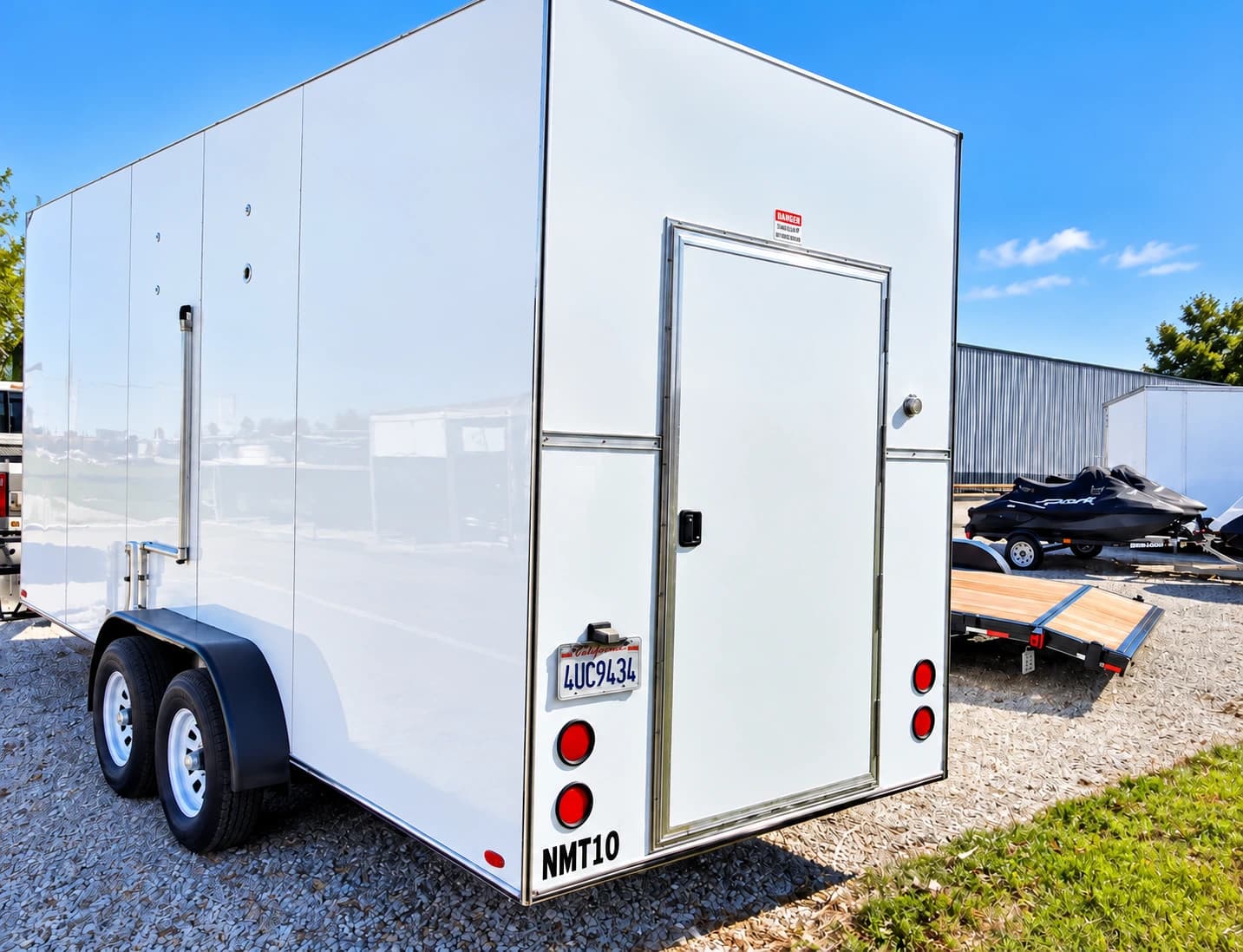
12 ft Refrigerated Trailer

Starting from $1,895 / month

The smallest trailer in the lineup. It fits tight lots and loading areas when a small walk-in cooler or freezer goes down.

View details

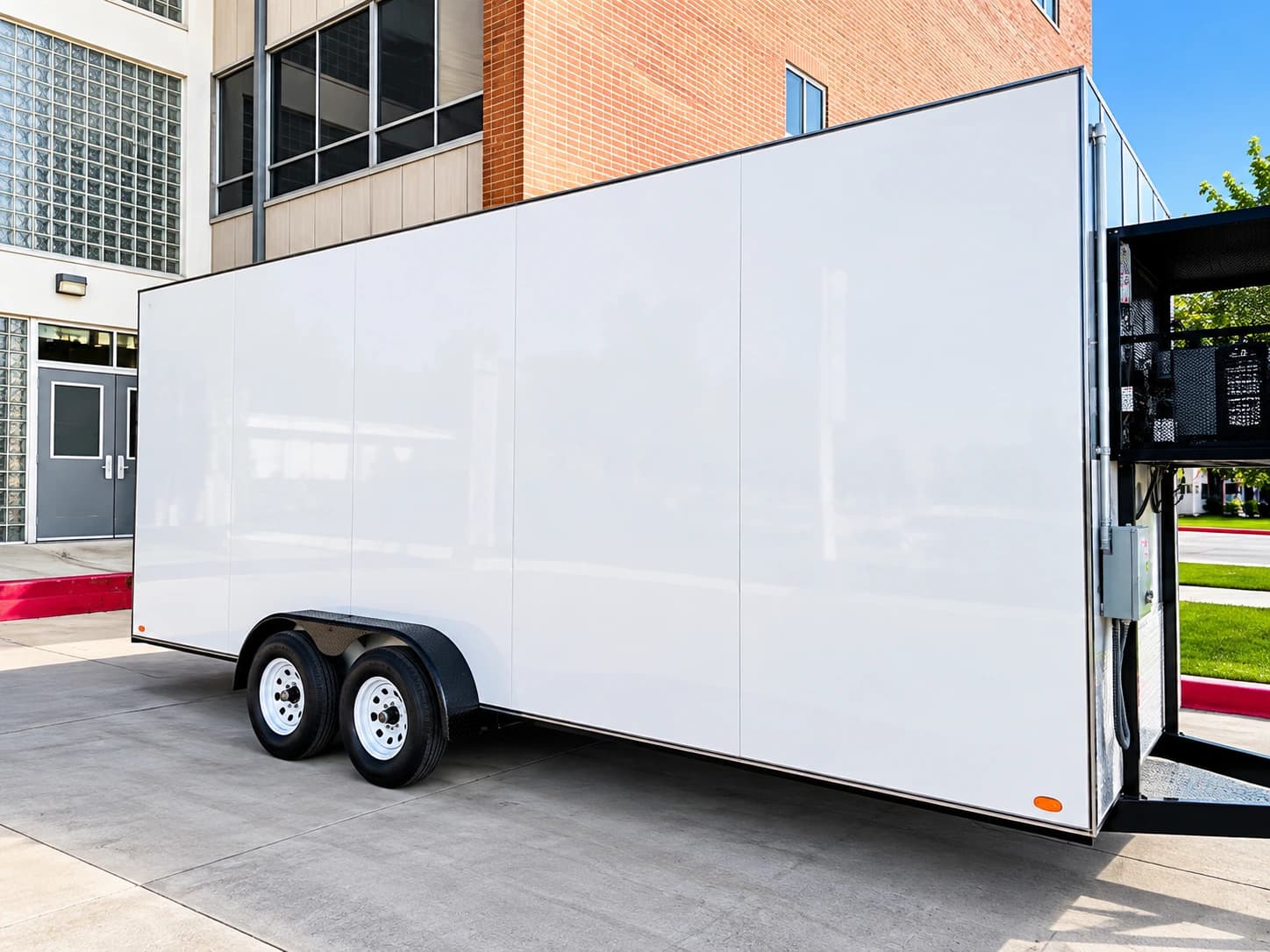
20 ft Refrigerated Trailer

Starting from $1,895 / month

The workhorse. A 20 ft trailer comes as a 32°F cooler or as a low-temperature freezer configuration, so you can match what failed.

View details

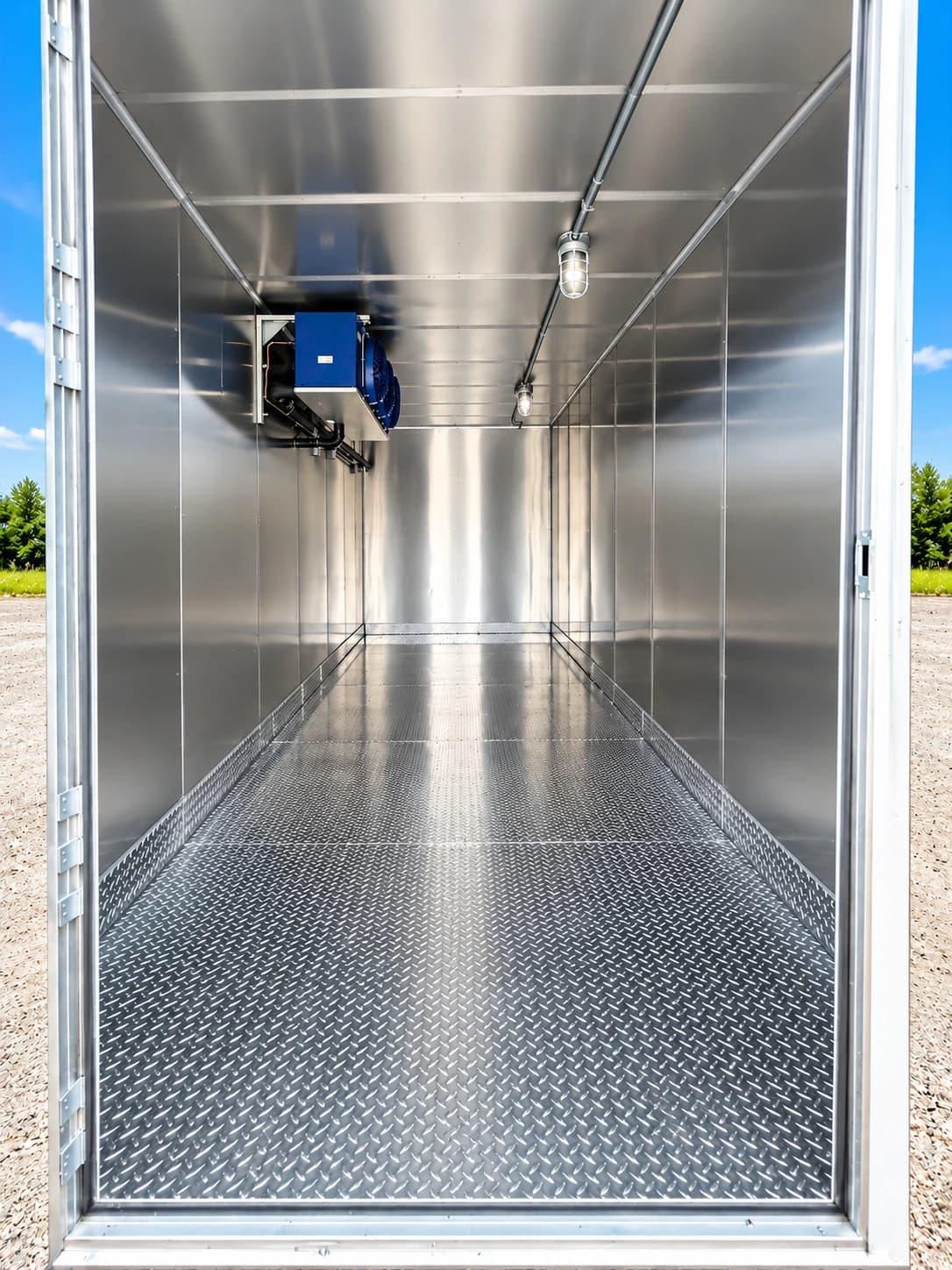
40 ft Refrigerated Container

Starting from $3,995 / month

The largest cold storage option. It takes pallets and bulk product for food distribution, disaster response, and large facilities.

View details
White refrigerated trailer with a rear door parked on a gravel lot
Long stainless steel cold storage interior with a diamond-plate floor and work lights
White refrigerated trailer on a paved lot with a power connection panel at the rear

Rental terms at a glance

Rentals run by the week or by the month, with short-term and long-term options, and we answer calls 24 hours a day, 7 days a week. Setup on site takes about 1 hour for a refrigeration unit and about 5 hours for a kitchen or dishwashing trailer; a ramp adds 4 to 6 hours and stairs add 5 to 15 minutes. GPS tracking is possible on request. Delivery, setup, servicing, and minimum terms are confirmed in your quote, and an inquiry does not reserve equipment.

Cold storage down? Call now.

Emergency refrigeration rentals in Wisconsin.

If a walk-in cooler or freezer has stopped holding temperature, call now. Tell us your city and state, what failed, how much product is at risk, and what power is on site. Keep doors closed to hold the cold while we work out the right trailer or container for you.

Call 24/7: (888) 385-5513

Frequently asked questions

How do I rent a refrigerated trailer in Wisconsin?

Call (888) 385-5513 or send the quote form with the address, what failed, the temperature you need, and the power at your site. We confirm the unit, availability, delivery, and terms in your quote. An inquiry does not reserve equipment.

Which Wisconsin cities do you serve?

Service is nationwide, so we serve commercial and industrial customers across Wisconsin. We list pages for Milwaukee, Madison, Green Bay, Kenosha, Racine, and Sturgeon Bay and 14 more cities and towns. If your site is elsewhere in the state, call and we will confirm.

Can I rent a refrigerated container in Wisconsin for a long project?

Yes. A 20 ft or 40 ft refrigerated container suits renovations and seasonal peaks in Wisconsin. Rent short term or lease for months, and see the full price rows on each unit page.

Do you rent mobile kitchens and dishwashing trailers in Wisconsin?

Yes. When a Wisconsin kitchen is down, we rent mobile kitchens and commercial dishwashing trailers to pair with refrigeration.

Who regulates food safety in Wisconsin?

Wisconsin Department of Agriculture, Trade and Consumer Protection (DATCP), Division of Food and Recreational Safety (https://datcp.wi.gov) is the state agency to start with. Local health departments may add their own rules, so check before placing temporary refrigeration or a temporary kitchen.

What to send for a fast quote

  • The city and state where the unit will sit
  • What failed and how much product is at risk
  • Cooler (32°F) or freezer temperature needed
  • Power available at the site: voltage, phase, and amps
  • Access: gate or door width, surface, and where the unit will be placed
  • How long you expect to need it

Prefer to talk? Call (888) 385-5513 any time.

Request availability and a quote

Need help right now? Call (888) 385-5513. An inquiry does not reserve equipment.

Request availability and a quote

Emergency? Call (888) 385-5513 now, 24 hours a day.

Need help right now? Call (888) 385-5513. An inquiry does not reserve equipment.

Call In 24/7